A manuscript can be finished while the reader’s route through it remains unsettled. The place where a chapter begins, the way a note returns you to a sentence, and the behavior of a caption on a small screen all belong to the edition. These decisions are close enough to the text to change how it is read.
An object before an abstraction
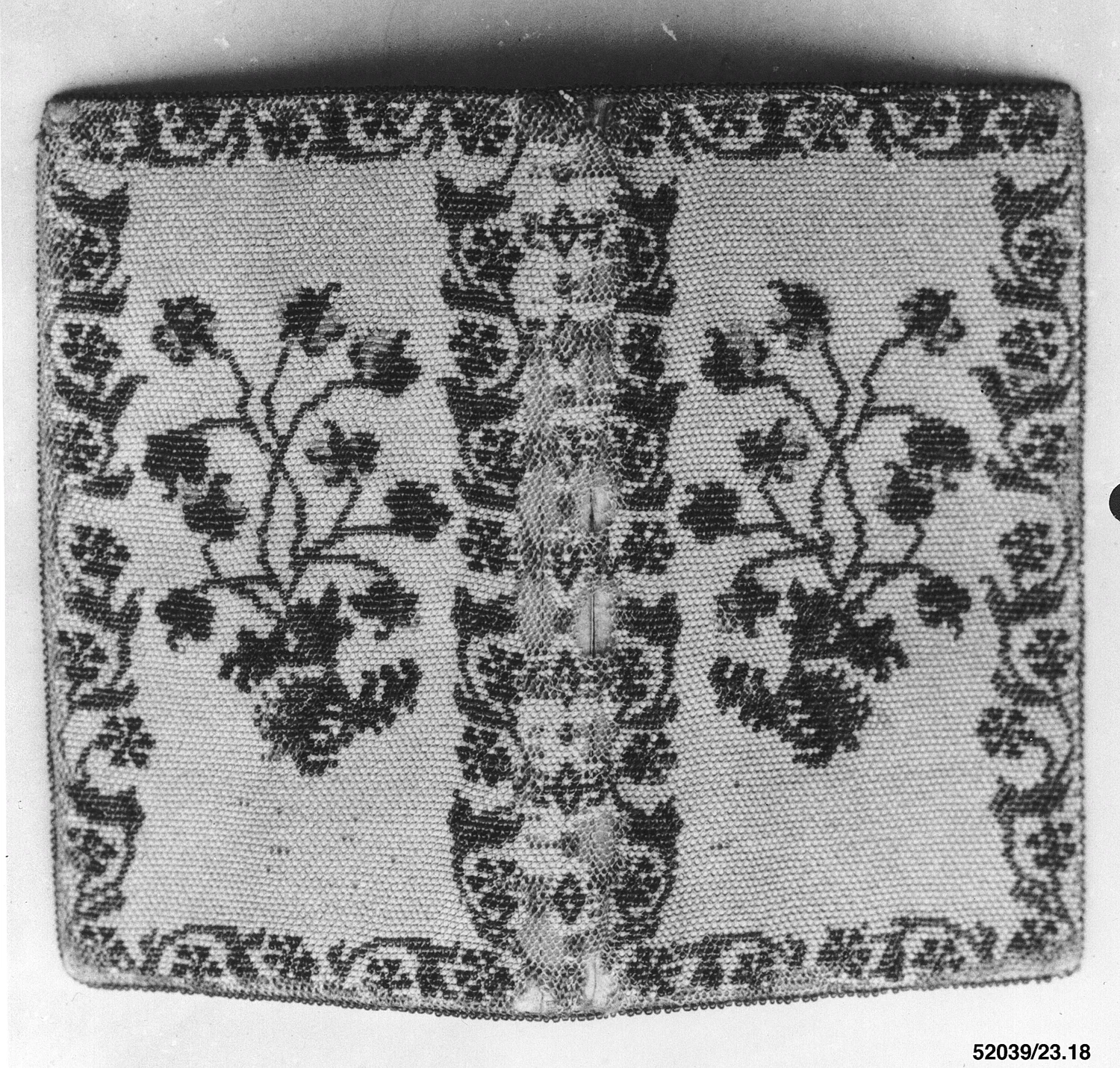
The Met records the binding pictured here as French, dated 1776, and classifies it as embroidered textile. It makes the material presence of a book unusually easy to see. The image tells us nothing about the quality of the text once enclosed by it; it does invite us to notice the threshold between a work and the form in which a reader encounters it.
Choose what can move
Apple’s interior-design guidance distinguishes reflowable EPUBs, where readers can adjust text size, from fixed layouts intended for work whose visual arrangement carries more of the meaning. It also emphasizes legible type and working navigation. The guidance is a useful starting point for a format decision.
Ask what the page is doing. In a mostly prose work, a paragraph can usually move while preserving its relation to the next paragraph. In an illustrated sequence, the relation between text and image may be the point. The question is not how closely an ebook can mimic a print page; it is which relationships the reader needs the edition to preserve.
Read the path, not only the page
Begin a proof at the contents page. Follow a chapter link, open a note, and return. Move forward, then try to recover a passage. Increase the text size where the format permits it. The purpose is to examine the journey someone can actually make through the file, including the journey back.
Read a few passages out of their familiar context. A heading that made sense beside a manuscript comment may be ambiguous alone. A caption that seems attached to the right image in one arrangement may drift away in another. A reference can be accurate and still be difficult to find.
Reader note: Choose one chapter and trace every departure from its main text. Each footnote, image reference, and cross-reference should offer a legible return.
Keep the edition identifiable
Give the approved export a clear version and preserve the file that produced it. Record the proofing environment and unresolved issues. If a correction reaches the text later, you need to know which editions carry it and which need another export. A folder full of nearly identical final files makes that work unnecessarily uncertain.
Formatting is often treated as the last production service in a chain. It is also a reading decision. Someone must decide whether a flourish earns its space, whether a note helps more than it interrupts, and whether an image remains understandable when the page changes.
The final check returns to a simple scene: a reader opens the book without the author beside them. The edition needs to contain enough direction for that encounter to work.
Sources & limits
The binding image is a historical object, not an example of the interior practices discussed here. Apple’s page supplies format and navigation guidance for its platform. The proofing sequence is our editorial proposal, not a report of device tests.
- Apple Books for Authors — Designing great book layouts and interiors
Apple Books for Authors · Source undated · Consulted 15 Sept 2026Reference for the format, object or working-method context described in this essay.
- The Metropolitan Museum of Art — Bookbinding, French, 1776
The Metropolitan Museum of Art · Source undated · Consulted 15 Sept 2026Reference for the format, object or working-method context described in this essay.
Send a correction with the passage and supporting source.