Map the reading order
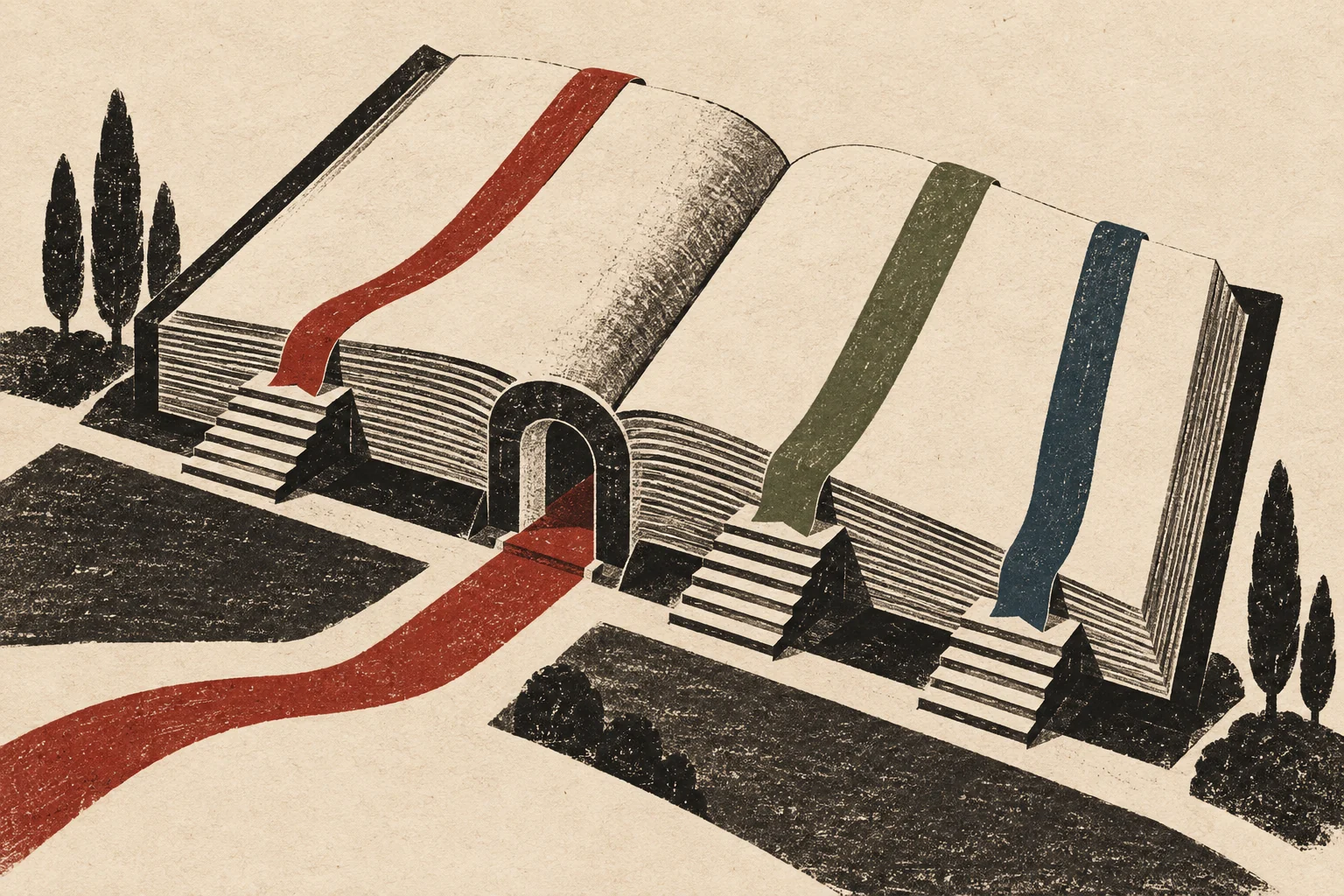
EPUB 3.3 makes the navigation document mandatory and requires exactly one table-of-contents nav. It is a human- and machine-readable route into a book, not decorative front matter. Build it from the exported reading order.
For an essay collection, labels should match visible headings: Introduction, The Estuary, Notes, Acknowledgments. Avoid production names such as chapter-04-final. A reader should predict the destination without opening it.
Keep labels durable
Reading systems may create their own navigation widgets and discard styling, scripting, or images. Use meaningful text and a plain nested structure. An ornamental compass cannot substitute for Maps.
Page lists and landmarks do different work. A page list can help a class locate print page 112 in reflow; landmarks can route a reader to body matter, bibliography, or index. Include them only when they are accurate.
Read it in use
Open the EPUB in more than one reading system where possible. Follow every link, compare destination and heading, change font size, and reopen navigation. Record file version and applications tested. A valid package is a beginning, not proof of a good route.
Specific production checks
Check the table of contents after a chapter title changes. A common fault is a visible heading corrected in the XHTML while the navigation label remains old. For a collection with parts and essays, verify that a part heading is not a dead-end link and that each nested item lands on the first meaningful text.
Test a page list against the print edition by selecting three arbitrary page numbers: one before a chapter, one image page, and one note page. If the source pagination is unavailable or unreliable, omit the page list rather than offering false precision.
Sources & limits
Reading systems differ; this does not replace validation or accessibility evaluation.
- EPUB 3.3
W3C · Source dated 16 Jan 2025 · Consulted 15 Sept 2026Navigation is mandatory and has one toc nav; page-list and landmarks are additional aids.
Send a correction with the passage and supporting source.