At a glance / One fact record, two documents
| Catalogue blurb | Editorial synopsis |
|---|---|
| Public invitation | Internal account of the arc |
| Premise and stakes | Causation, turns and ending |
| Preserve the spoiler boundary | Label spoilers and distribution scope |
Name the audience before the document
A catalogue blurb helps a reader or bookseller recognize a book in a constrained public space. A synopsis lets an editor, agent, publicist, or rights reader understand the work’s actual arc, including turns a blurb would spoil. They may describe the same book, but they do not have the same permission to reveal or the same need for compression. Confusing them produces either evasive internal documents or overexposed public copy.
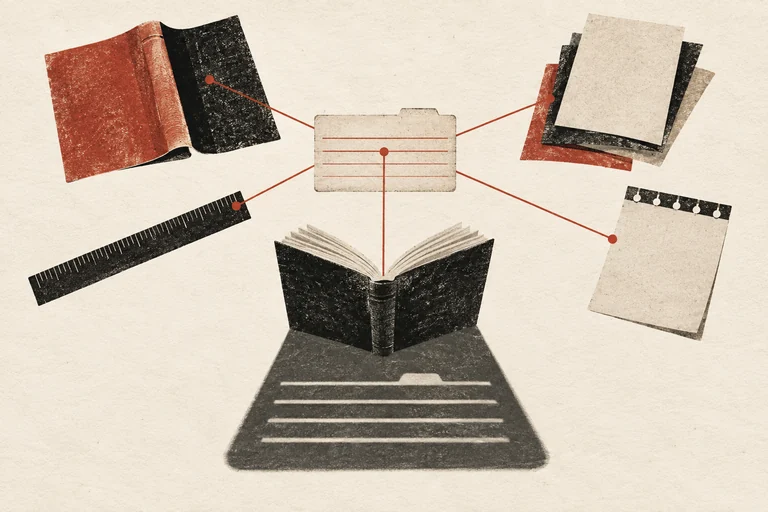
Keep one fact spine
Create a short source sheet before drafting: protagonist, setting, central pressure, major turn, ending status, point of view, edition-specific additions, and prohibited claims. The blurb and synopsis can then select from a shared record. When the manuscript changes, update the fact spine first. This prevents a catalogue claim about a missing character or an old title from surviving because promotional text became its own untracked manuscript.
Draft the blurb for recognition
For a mystery, a blurb might establish place, protagonist, disturbance, and stakes: ‘When archivist Lena Vale finds a letter misfiled under a dead poet, the town’s memorial week begins to look less settled.’ It need not identify the culprit or final choice. Read it beside a cover thumbnail and a product page title: can a reader tell what kind of invitation is being made without a false promise about genre, acclaim, or outcome?
Draft the synopsis for consequence
The matching synopsis may state that Lena forged the letter years earlier, that her brother discovers it, and that she publicly confesses at the memorial. It should track causation, not merely list scenes. Mark spoilers plainly in the file name and distribution note. A useful synopsis also identifies unfinished decisions: ‘ending revised after copyedit’ is more honest than silently circulating a version that no longer describes the manuscript.
Map copy to the metadata field
EDItEUR’s ONIX list distinguishes short description or annotation, unrestricted description, primary cover copy, and formal abstract. That vocabulary does not dictate your prose, but it stops a workflow from treating every text field as interchangeable. Maintain a delivery table with field, audience, character limit if supplied, approved version, and owner. Send plain text unless a receiving specification asks for markup; the front end can decide presentation later.
Review the text after each substantial manuscript change and before metadata delivery. A synopsis can reveal the new ending while the public description quite properly does not, but both must still describe the same protagonist and premise. Version each approved copy by purpose, not by vague labels such as ‘latest’. That simple distinction makes a late jacket change easier to assess without accidentally overwriting an editor-only record.
Sources & limits
Distributor fields and retailer displays vary; confirm the receiving partner’s current specification before delivery.
- ONIX Codelists Issue 74 – list 153
EDItEUR · Source undated · Consulted 19 Sept 2026ONIX distinguishes short description, description, primary cover copy, table of contents, and formal abstract text types.
Send a correction with the passage and supporting source.