Two outcomes can move differently
Anil Doshi and Oliver Hauser’s 2024 Science Advances paper reports an online experiment in which some writers could obtain story ideas from a language model. The abstract reports higher evaluations of creativity, writing and enjoyment for assisted stories, particularly among writers with lower baseline creativity. It also reports greater similarity among the assisted stories.
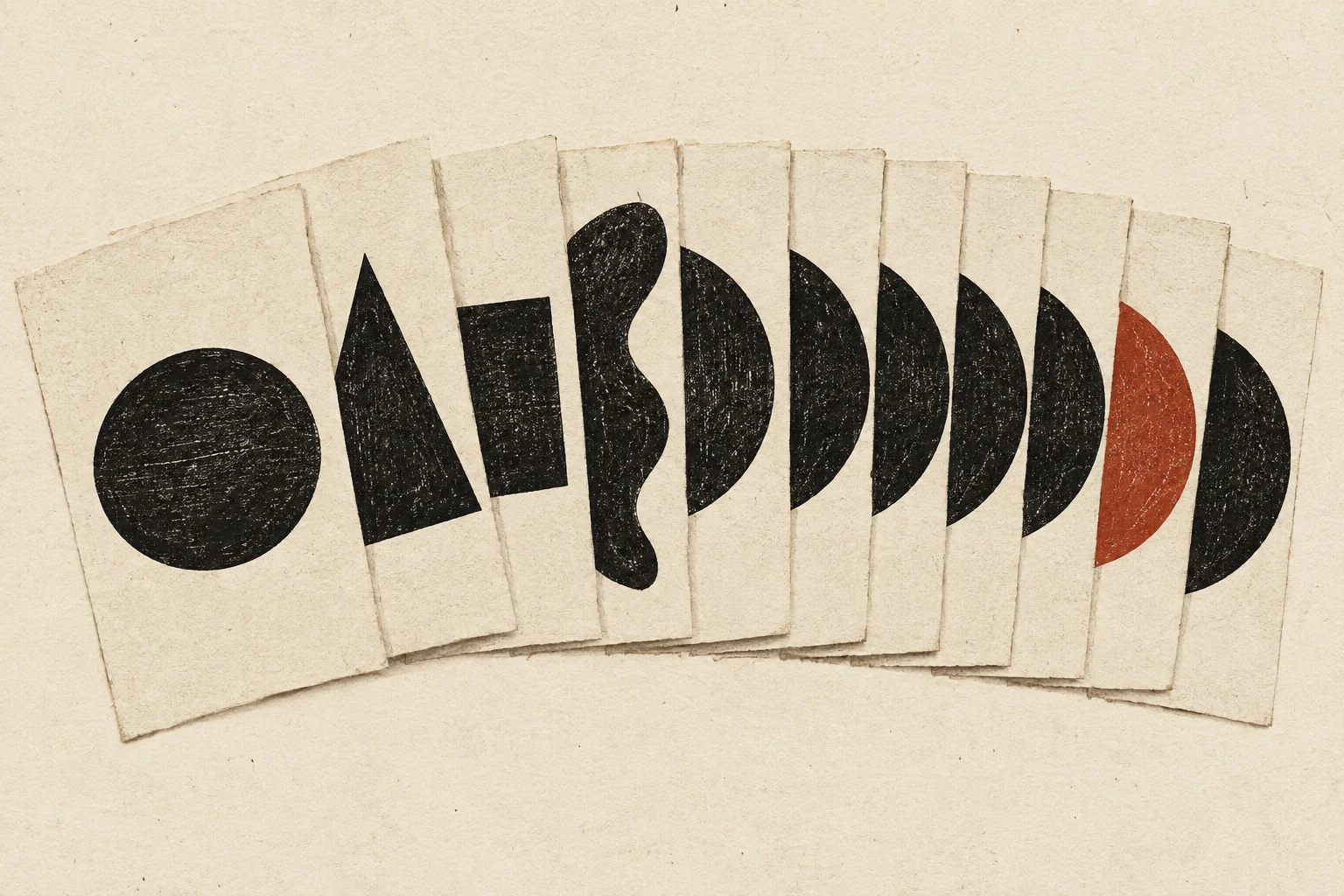
Those are different outcomes. A story can receive a better individual rating while the collection of stories becomes less varied. Collapsing the findings into a single claim about “creativity” loses the most interesting tension in the study.
Respect the experimental frame
A short-story task in an online experiment is not the same as composing a novel over several years, translating poetry or revising a reported book with an editor. The paper supplies evidence about its setting. Wider claims require further work and should be identified as hypotheses.
The evaluation also concerns readers’ assessments and comparisons among outputs. It is not a direct measurement of an author’s entire imagination, and it does not establish how every writer will respond to every model or prompt. These limits make the result more interpretable, not less worth reading.
An editorial use for the distinction
A workshop can borrow the question without pretending to repeat the experiment. Ask participants to compare the range of premises across a group, as well as the quality of each finished piece. Does everyone arrive at similar conflicts, resolutions or voices? What changes when people begin from personal observation instead?
That proposed exercise is a way of noticing, not a tested intervention. Its value is in keeping two scales visible: what helps one writer on one occasion, and what happens to the variety of work a community produces. A literary publication has reason to care about both, especially when familiar suggestions begin to feel like the natural limits of a form.
Sources & limits
Research context based on the published abstract and author-deposited record. No new experiment or universal claim about creativity is presented.
- Generative AI enhances individual creativity but reduces collective diversity
Science Advances · Source dated 12 Jul 2024 · Consulted 15 Sept 2026Published abstract reports improved individual ratings and greater similarity across assisted stories.
- Author-deposited study record
Doshi and Hauser / arXiv · Source dated 1 Dec 2023 · Consulted 15 Sept 2026Preprint history and abstract; distinguish deposit from the 2024 journal publication.
Send a correction with the passage and supporting source.