1. What does this retailer ask?
Read KDP’s Content Guidelines for its distinction between AI-generated and AI-assisted material. This is the place to understand the platform’s disclosure vocabulary. It should not be treated as a universal artistic definition or as a statement about what every other retailer requires. Preserve the wording and check date that apply to the upload in question.
2. What human expression is being considered?
Read the U.S. Copyright Office’s Part 2 release and report on copyrightability. Notice the focus on human determination of expressive elements and the distinction from mere prompting. Keep that question separate from the rights status of source material, a contract’s promises, and the separate debate about model training.
3. What does a voluntary certification cover?
Read the Authors Guild’s Human Authored FAQ together with the relevant license terms. The program describes a declaration under a definition, not a book review. Check the edition and registered title before treating a mark as a reference. Absence from a voluntary register does not establish the origin of an unlisted text.
4. What can a detection study establish?
Read Tufts, Zhao and Li’s ACL paper record, then the full paper if evaluating a detector. Its experiments concern named systems under particular conditions, including unfamiliar domains and prompting. The result is evidence about measurement limitations, not a way to reconstruct the production history of an individual manuscript.
Keep a question beside each source
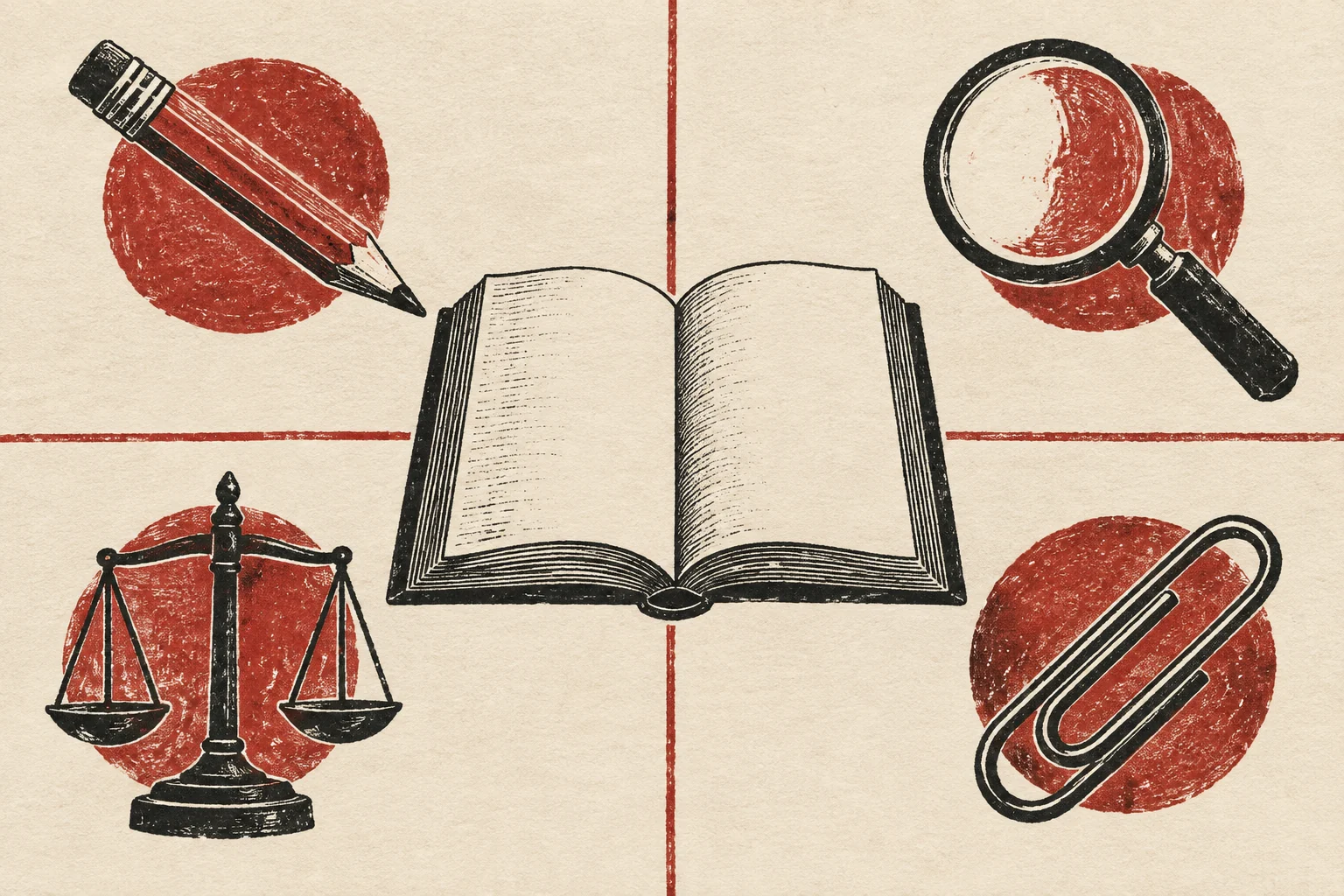
This route works best as a four-row sheet with one question per row. Add the source, date consulted, relevant passage and unresolved point. If one source seems to answer all four, examine the inference again. Writers and editors need precise obligations and evidence, not a single word that silently changes meaning from one conversation to the next.
Sources & limits
A primary-reference reading route, not legal advice, platform approval or a report of detector testing. Consult current terms for an actual submission.
- KDP Content Guidelines
Kindle Direct Publishing · Source undated · Consulted 15 Sept 2026Retailer-specific AI-generated/AI-assisted disclosure distinction.
- AI report Part 2 release
U.S. Copyright Office · Source dated 29 Jan 2025 · Consulted 15 Sept 2026Human-expression focus and copyrightability scope.
- Human Authored FAQ
The Authors Guild · Source undated · Consulted 15 Sept 2026Definition, title registration and certification process.
- A Practical Examination of AI-Generated Text Detectors
Association for Computational Linguistics · Source dated 2025 · Consulted 15 Sept 2026Detector evaluation scope and limitations in the abstract.
Send a correction with the passage and supporting source.