The passage
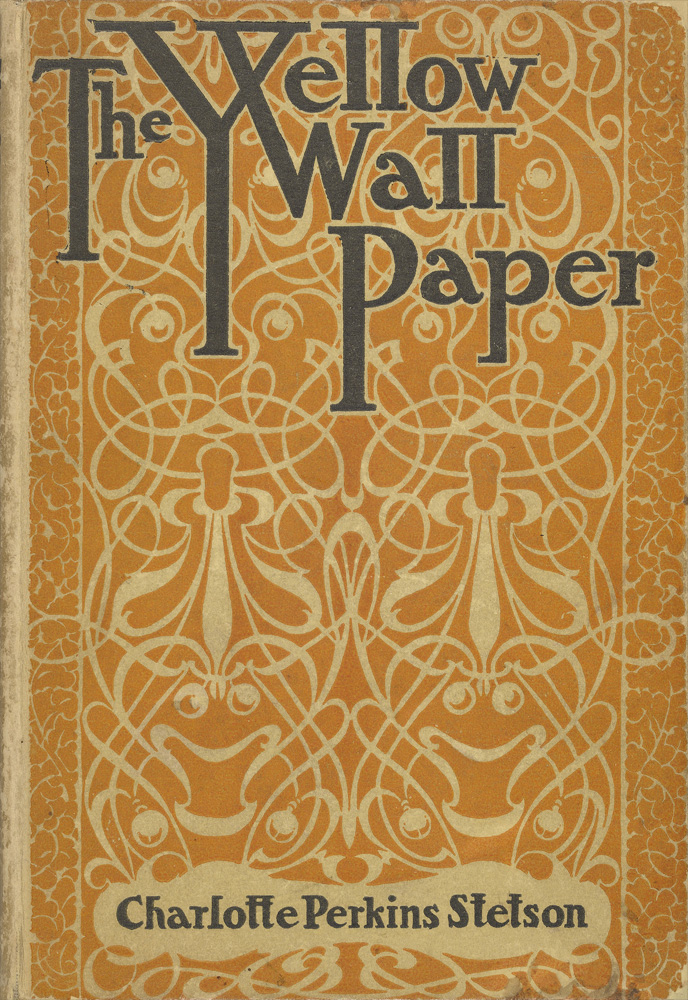
In “The Yellow Wallpaper,” the narrator returns to the wall covering with the concentration of someone given too little else to do. She calls its pattern lame, uncertain, and provoking, then begins to see a second pattern and a woman behind it. Gilman makes description itself unstable: the more closely the narrator looks, the less the object agrees to stay an object.
Observation without control
The narrator's vocabulary is exact before it becomes extravagant. She distinguishes front pattern from sub-pattern, daylight from moonlight, bars from curves, and scent from sight. These distinctions give the account an investigative energy. But investigation does not produce mastery because the room's social arrangement has denied her ordinary forms of action, work, and credible speech. Her reading of the paper grows inside that confinement.
The woman's movement behind the pattern is therefore not a puzzle answer the reader is asked to confirm. It changes with time and light, and it mirrors the narrator's own restricted movement without becoming a neat one-to-one emblem. The story's first-person form is crucial: we receive the observations in the very writing that the narrator has to hide. Secrecy shapes not only what she can do but how the sentences hurry, qualify, insist, and return. The wallpaper is terrifying because it becomes the only available surface on which a denied mind can keep making patterns.
A craft use
A recurring object can carry psychological pressure when the prose tracks its changes in conditions: night and day, distance and closeness, permitted and forbidden attention. Preserve the observer's concrete sensory labor. It prevents a symbol from becoming a label and lets the reader feel how the pattern takes hold. The return should produce a different problem each time, so recurrence records pressure rather than simply repeating an atmosphere.
Sources & limits
This is a close reading of the inspected text, not a clinical diagnosis of its narrator or a claim that the wallpaper has one settled referent.
- The Yellow Wallpaper
Project Gutenberg · Source undated · Consulted 15 Sept 2026The inspected story repeatedly describes the wallpaper's changing pattern and the figure perceived behind it. The formal claims are close reading.
Send a correction with the passage and supporting source.