Judgment before the envelope opens
Passing begins with an envelope that does not fit Irene Redfield's ordinary morning mail. Its thin Italian paper, large size, purple ink, and difficult handwriting identify it as an intrusion before she reads it. The absence of a return address does not prevent recognition: another letter like it arrived two years earlier. Larsen establishes a history through the look of a physical object.
Irene's description combines concealment and display. She thinks of the letter as furtive, but also determinedly conspicuous. Those apparently opposed qualities prepare her judgment of Clare Kendry. The New York postmark brings that judgment into the present, because proximity makes renewed contact possible. Irene anticipates danger in the contents while the envelope remains closed.
Reading the turn
Memory delays the opening. Irene recalls Clare as a girl sewing a red dress while her father threatens her, and later remembers her behavior around his death. These scenes arrive already organized by Irene's account of Clare's appetite for risk. Their vividness should not make the reader forget who is selecting and interpreting them. Larsen lets a remembered person seem intensely present while keeping the act of recollection in view.
When Irene finally cuts the envelope, Clare's wish to meet confirms what she expected, but the reader has learned more than the message's request. We have watched Irene build the terms under which she will receive it. This opening is a precise model for suspense created by postponing an ordinary action. The delay is occupied by psychological work, not empty obstruction. Paper and ink start the process; the remembered scenes deepen it; reading comes after a judgment has begun to harden. The novel's opening asks us to distinguish familiarity with another person from authority over the meaning of her life.
Sources & limits
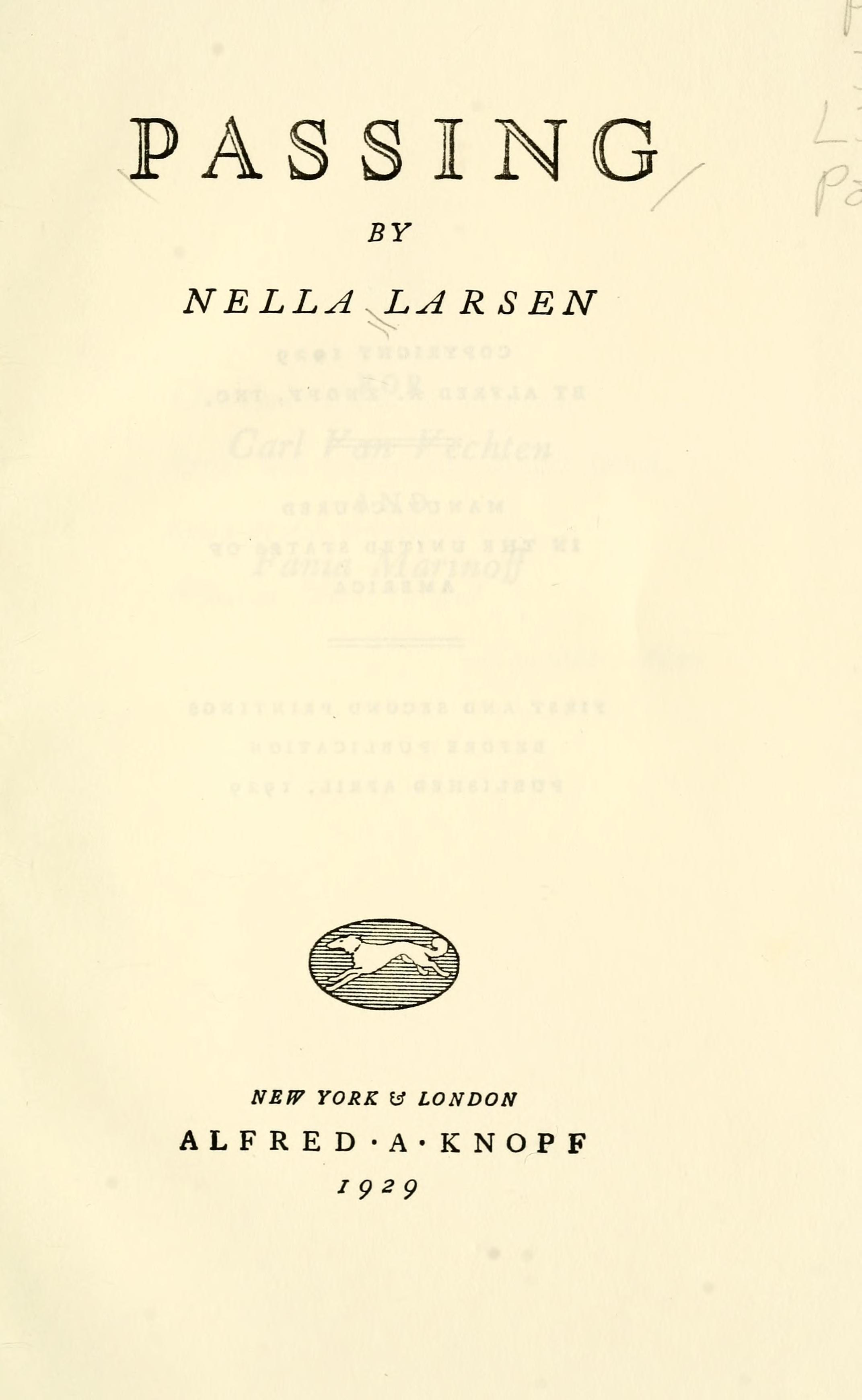
Passage study of the section identified here, using the linked edition and retained transcription; not a whole-book review or a claim about authorial intention.
- Passing, Part One
Primary text record · Source undated · Consulted 15 Sept 2026Part One, Encounter, One describes the envelope, New York postmark, memories of Clare, and delayed reading of her request to meet. The argument about narrative form is this publication’s close-reading interpretation.
Send a correction with the passage and supporting source.