The passage
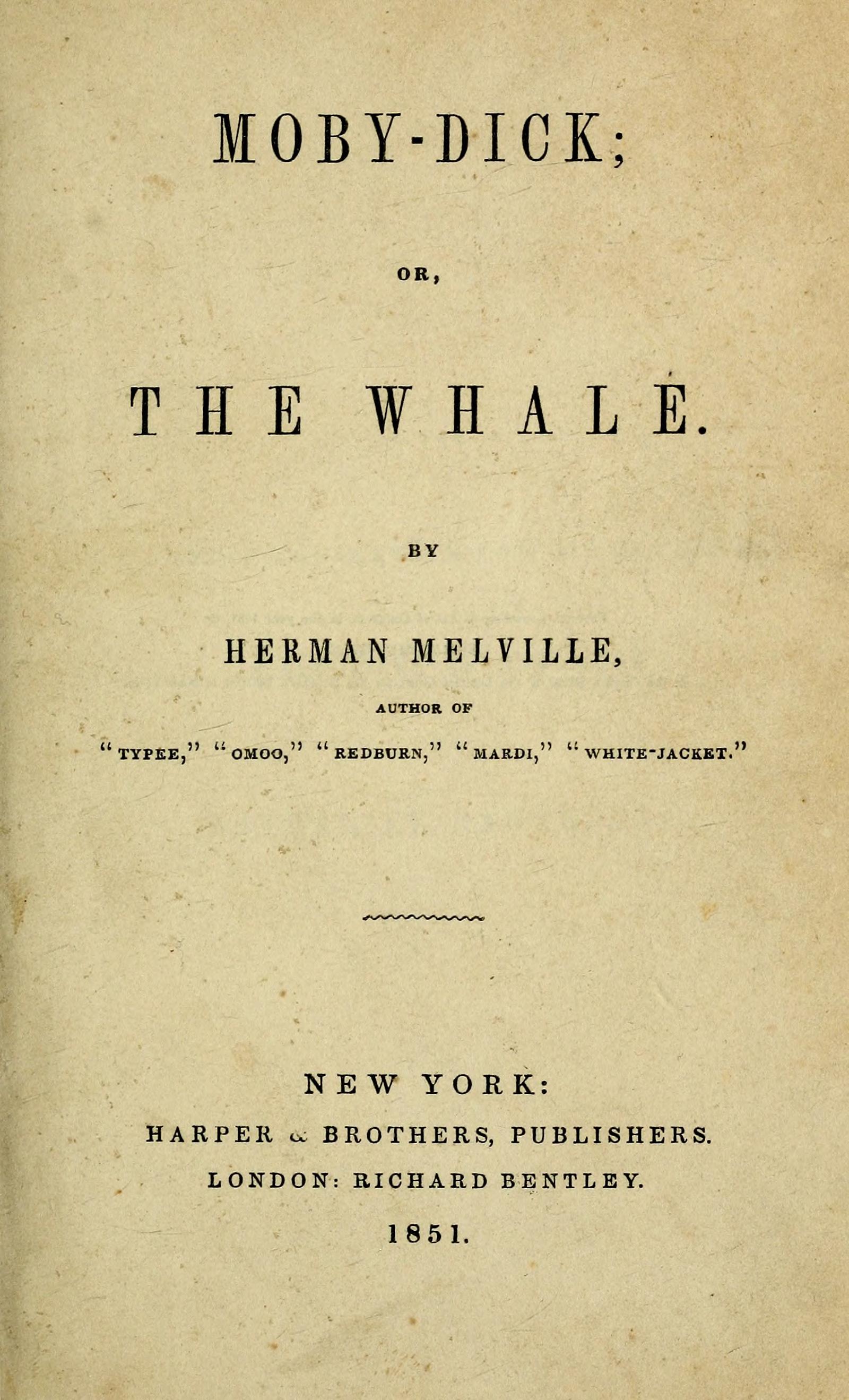
Chapter 42 of Moby-Dick asks why the whale's whiteness unsettles Ishmael. It does not offer one answer and defend it. Instead, the chapter moves through sacred associations, royal display, natural landscapes, burial, terror, and visual blankness. Whiteness is both the subject and the problem of the chapter's method.
Examples that will not become proof
The chapter's lists have a double motion. Each example briefly stabilizes whiteness: it can signify purity, majesty, protection, or beauty. But the next example carries it toward vacancy, coldness, or threat. Melville does not cancel the earlier meanings. He lets them stay available, so that the word begins to feel overcharged rather than clarified. The whale is frightening not because a symbol has been decoded, but because the symbol refuses a final use.
That refusal changes the role of the narrator. Ishmael sounds learned, speculative, comic, and alarmed in turn. His argument has the energy of research, yet its accumulation reveals the limits of research when the object is an affective experience. The chapter makes room for a thought that cannot become a clean proposition. Its rhetoric is expansive because the uncertainty is expansive; every analogy gives the mind another handle and another reason to let go.
A craft use
An essayistic passage can gain force by making its examples disagree honestly. Choose a recurring object or color, then test it in contexts that change its charge. Do not arrange the sequence merely to prove a thesis. Let the pattern show where a thesis becomes too small for the sensation it is trying to name. The reader should be able to feel why another example is needed, even when it unsettles the claim that seemed strongest one paragraph earlier. A final question may be truer than a concluding definition when the passage's subject is irreducibly unstable.
Sources & limits
This study addresses Chapter 42 in the inspected Gutenberg text; it does not reduce the whale to one symbol or claim a complete account of the novel.
- Moby-Dick; or, The Whale, Chapter 42: The Whiteness of the Whale
Project Gutenberg · Source undated · Consulted 15 Sept 2026The inspected chapter considers multiple associations of whiteness in relation to the whale. The account of its accumulating method is close reading.
Send a correction with the passage and supporting source.