The passage
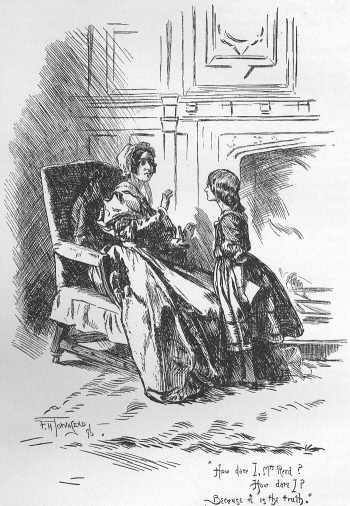
In Chapter 2, Jane is locked in the Red-Room after defending herself against John Reed. The room is described with striking precision: its bed, mirrors, curtains, pale furniture, and the remembered death of Mr. Reed. But the description does not stand outside Jane. Objects gather force because she has been sent there as punishment and has no adult ally inside the scene.
How the room gets larger
Brontë lets Jane's attention move in stages. First comes the social fact: this is a room almost never used, preserved for the dead man whose authority Mrs. Reed claims. Then comes the child's physical relation to its surfaces. The mirror doubles Jane into a small, strange figure; the distant window makes the daylight weak; the red upholstery turns color into atmosphere. None of these details needs a supernatural explanation to feel threatening.
The possibility of a ghost enters as Jane tries to reason about injustice. She has been told that Mr. Reed wished her protected, yet she is imprisoned by his widow. The imagined return is therefore not only fear of the dead; it is a fantasy that an absent authority might see what is happening. When the light seems to move, terror becomes bodily and urgent. The narration preserves the child’s reasoning without condescending to it. Jane is frightened, but she is also making a lucid case about power.
A craft use
To give a room dramatic agency, attach physical details to a changing need. A mirror can be merely decorative until a character needs proof of selfhood; a locked door can be merely factual until it confirms that appeal is impossible. Let the environment answer the character's pressure, even if it never literally acts. Specific furniture works best when it is not merely listed but encountered from a frightened body with limited choices.
Sources & limits
This reading is limited to Chapter 2 in the inspected public-domain text and does not infer Brontë's autobiographical intention.
- Jane Eyre, Chapter 2
Project Gutenberg · Source undated · Consulted 15 Sept 2026The inspected chapter places Jane in the Red-Room and describes its furnishings, mirror, and family association. The account of setting and authority is interpretive close reading.
Send a correction with the passage and supporting source.