A house in three letters
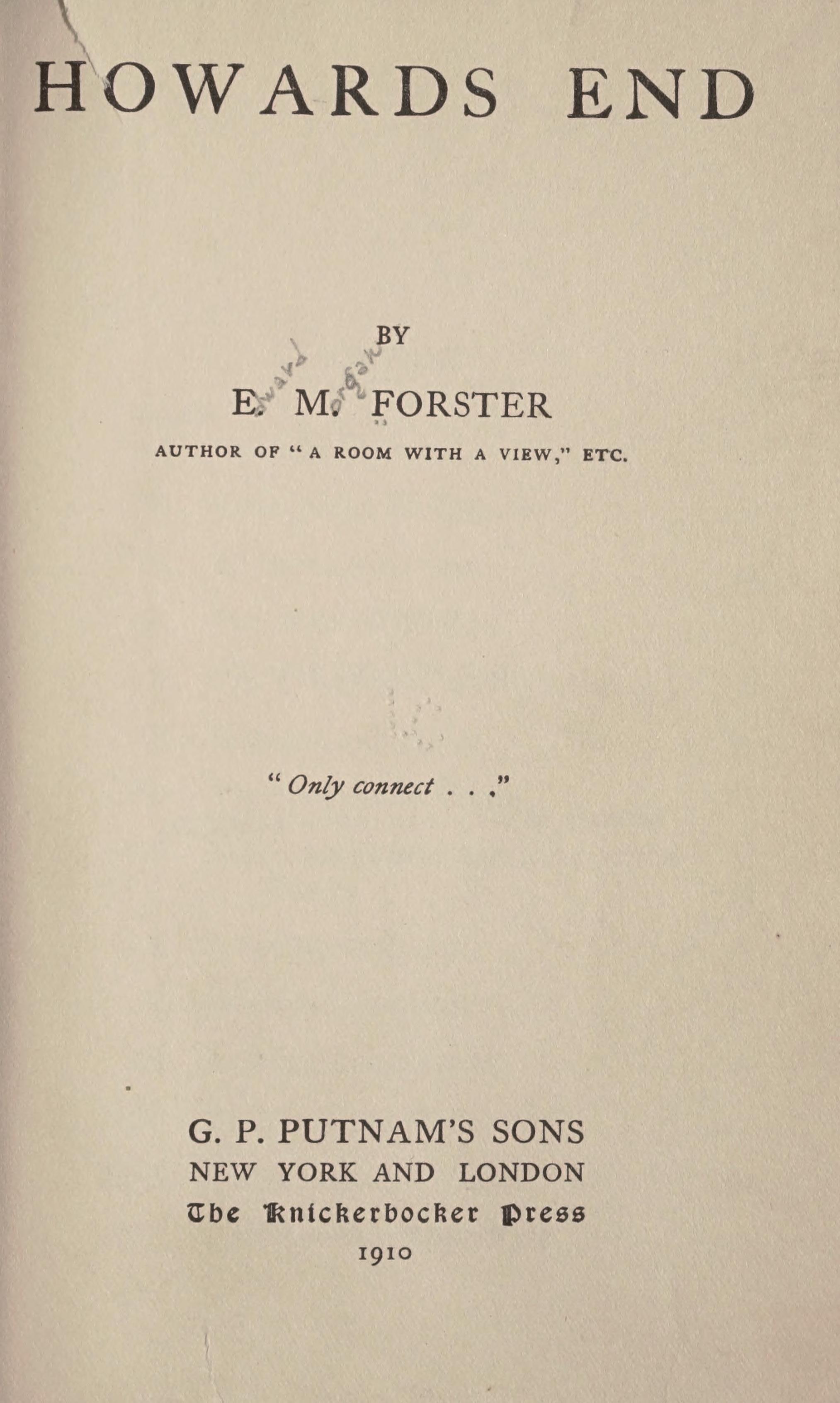
Howards End begins by proposing that Helen's letters will do as a starting point. The first describes the house to her sister Meg: red brick, rooms opening from the hall, stairs in a tunnel, and windows counted from the garden. The inventory revises their expectation of an ostentatious home. Helen first gives her sister something like a plan, then begins filling it with people and judgments.
From the window she watches Mrs Wilcox smelling cut hay, then successive family members interrupt their games or exercises with hay fever. Repetition makes the scene comic. Mrs Wilcox's return to the flowers establishes a different rhythm from the family's energetic use of the garden. Helen herself wonders whether she is seeing life or a play. The letter exposes her pleasure in arranging a morning into a little performance.
Reading the turn
Friday's letter reports a more sweeping conversion. Helen admires the family and feels chastened by Mr Wilcox's arguments against equality and women's suffrage. Her delight in his confidence does not require the reader to accept his position. Because we hear the report in her delighted voice, conviction and social attraction become difficult to separate. The letter records the force of an encounter as well as its stated ideas.
Then Sunday's brief announcement declares that she and Paul are in love. Its speed changes the scale of everything preceding it. The detailed description of the house has delivered the reader into an attachment that seems to have outrun reflection. Forster uses differences in length and tempo as structural information: spacious observation, enthusiastic allegiance, abrupt news. An epistolary opening can achieve this without a narrator explaining every transition. Dates, omissions, and sudden brevity let correspondence disclose what its writer has not paused to assess.
Sources & limits
Passage study of the section identified here, using the linked edition and retained transcription; not a whole-book review or a claim about authorial intention.
- Howards End, Chapter I
Primary text record · Source undated · Consulted 15 Sept 2026Chapter 1 consists of Helen’s Tuesday, Friday, and Sunday letters, ending with the announcement about Paul. The argument about narrative form is this publication’s close-reading interpretation.
Send a correction with the passage and supporting source.