The passage
Chapter 5 gives Victor the instant he has spent years pursuing: on a November night, he sees the creature move. Shelley makes the achievement startlingly compressed. The language lingers on selected features, then collapses the maker's preparations into a recoil. The chapter is less interested in how life is made than in what Victor does once another being looks back.
Deflating the expected climax
The scene's syntax keeps refusing triumph. Victor has chosen beautiful parts, yet the completed face defeats his description; the eyes open, the breath comes, and the account gives way to horror. Instead of an explanatory pause, Shelley sends him into sleep and a dream in which Elizabeth's face becomes his dead mother's. That displacement does not explain the dream away. It binds desire, possession, decay, and flight in an image Victor cannot control.
Later that night, after the dream and his waking, the creature smiles and reaches out; Victor runs. The narration records behavior before it offers theory. That ordering is ethically severe: abandonment is not a later implication extracted from the plot but the immediate act after creation. Victor's self-pity, illness, and relief at Clerval's arrival then occupy the space in which care might have occurred. The chapter lets consequence begin in an omission.
A craft use
When a story approaches a long-promised technical or emotional breakthrough, consider writing the first aftermath more fully than the breakthrough itself. A short fulfillment followed by a particular refusal can keep achievement from sealing the scene. The question that animates this chapter is practical: after the irreversible act, who remains in the room and who leaves? That question can give exposition stakes when the event itself is necessarily swift or partly unseen. It can also prevent a creator-character's ambition from becoming a substitute for attending to the person affected.
Sources & limits
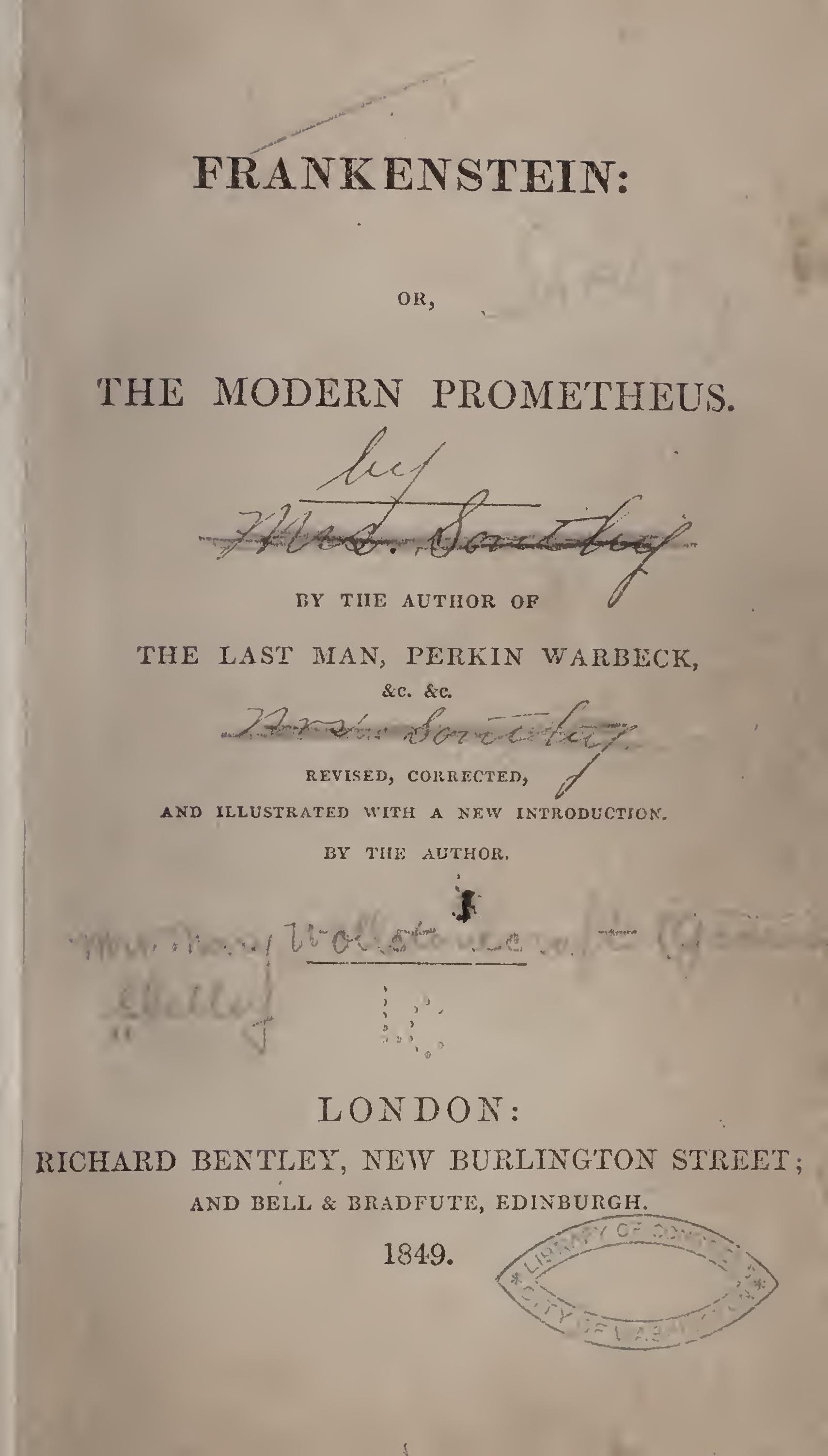
This reading concerns Chapter 5 in the inspected 1831 revised text at Project Gutenberg #84; it does not settle differences between the 1818 and 1831 texts.
- Frankenstein; or, The Modern Prometheus (1831 revised edition), Chapter 5
Project Gutenberg · Source undated · Consulted 15 Sept 2026The inspected Project Gutenberg #84 transcription identifies the 1831 revised text and its Chapter 5 stages animation, Victor's dream, and his flight. The treatment of evasion is a close-reading claim.
Send a correction with the passage and supporting source.