A 1976 law moved fair use into the statute for the first time
Copyright Office and House Report records date the 1976 Act's signing, its 1978 effective date, and Section 107's first statutory codification of fair use.
- Historical event
- October 19, 1976
- Site publication
- September 18, 2026
The record
The statute that still governs American copyright was signed in the autumn of 1976. The U.S. Copyright Office's own timeline of the 1950-2000 period records that on 19 October 1976, President Gerald Ford signed the Copyright Act of 1976, Public Law 94-553, describing it as 'the first major revision of the copyright law since 1909.' The Office's page states the law, with certain exceptions, took effect 1 January 1978 and superseded the 1909 Act; extended federal copyright to all works, published and unpublished, once fixed in tangible form; and changed duration from a renewable term of years to the life of the author plus fifty years, replacing the right to terminate a renewal term with a right to terminate a transfer after thirty-five years.
What the documents show
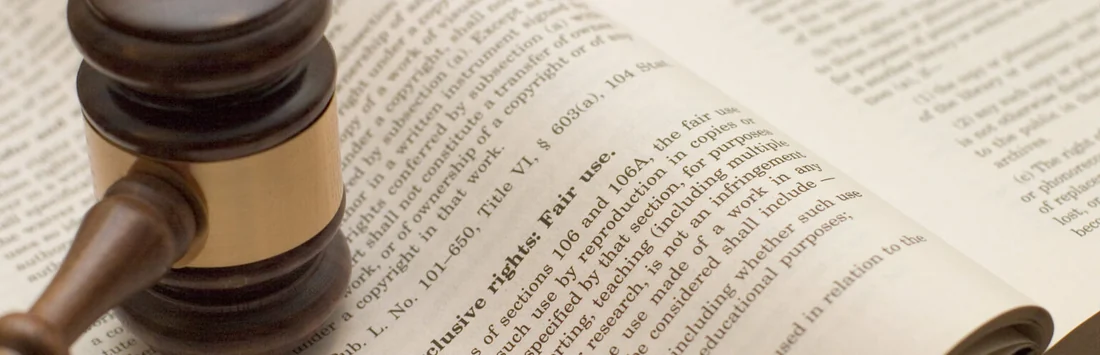
The Office's own guidance on fair use states that 'Section 107 of the Copyright Act provides the statutory framework' for the doctrine, naming criticism, comment, news reporting, teaching, scholarship, and research among the uses it addresses. The statute's own historical and revision notes, reproducing House Report No. 94-1476, are more exact: fair use, the report states, was 'one of the most important and well-established limitations' already recognized in case law, but would be 'given express statutory recognition for the first time in section 107.' The 1976 Act did not invent the doctrine; it moved a judge-made rule into the statute for the first time. The timeline page also names the later Sonny Bono Copyright Term Extension Act only to distinguish it, since that amendment, not this Act, produced today's life-plus-seventy standard.
Why it stays interesting
For a contract or a permissions log drafted today, the 1976 Act is the reason duration is calculated from an author's life rather than a filing date, and the reason a fair-use defense can be argued from a numbered section rather than case law alone. That does not make either question simple: per the House Report, Section 107 was meant to 'restate' existing doctrine rather than resolve every dispute over it, which is why fair-use analysis still turns on argument, not a checklist. This is an editorial point: a codified doctrine is not a settled one; the Act's durable interest lies in what it formalized, not what it decided.
What to read next
The Berne Convention entry is worth checking alongside this one: the United States did not join Berne until 1989, and the sequence shows domestic statute and treaty membership moving on separate timelines. The Universal Copyright Convention entry adds the formality-satisfying framework the United States relied on before either milestone.
- Does a given duration calculation rely on the life-plus-term rule from 1976 or a later extension?
- When a fair-use claim is made, is it argued from the statute's four factors or from precedent alone?
- What does a work's fixation date, rather than its registration date, actually establish under the 1976 framework?
The signing date and the effective date are both on the record; the more interesting fact is that the Act's most cited provision restated a doctrine rather than inventing one, a distinction the House Report itself was careful to draw.
Sources & reading trail
States the 19 October 1976 signing, Public Law 94-553, the 1 January 1978 effective date, and the duration change from the 1909 Act.
Source published: Not established · Retrieved: 16 September 2026
States that Section 107 of the Copyright Act provides the statutory framework for fair use, as the guidance reads on 16 September 2026.
Source published: Not established · Retrieved: 16 September 2026
Reproduces House Report No. 94-1476 stating fair use was given express statutory recognition for the first time in Section 107.
Source published: Not established · Retrieved: 16 September 2026
Reports, filings, records and studies establish the entry; the reading of why it stays interesting is Chapter Ledger editorial analysis. This retrospective draft does not imply the site published on the event date.
Continue reading
- An 1886 treaty made copyright protection automatic across borders
- A 1952 treaty made a copyright notice do formal legal work
- The Supreme Court left copyright term extension to Congress
- Browse the complete the ledger archive
Sources & reading trail
- Copyright Timeline: 1950-2000
Retrieved: September 16, 2026 - More Information on Fair Use
Retrieved: September 16, 2026 - 17 U.S. Code Section 107 - Limitations on exclusive rights: Fair use (Historical and Revision Notes)
Retrieved: September 16, 2026
The documents above establish the record. The reading and the questions are this publication’s editorial analysis, written after the fact.
Published September 18, 2026, not on the date of the event described.