A 1934 train delay led to a sixpenny paperback the next year
Penguin's own history and a company article date Allen Lane's 1935 launch, the sixpenny price, and the first colour-coded titles.
- Historical event
- January 1, 1935
- Site publication
- September 18, 2026
The record
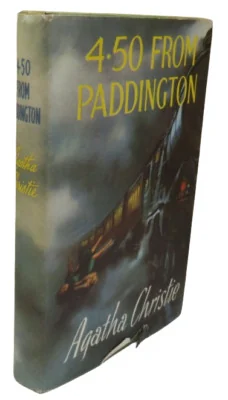
A publisher's own account of its origin is still, in this case, an anecdote about a train station rather than a boardroom decision. Penguin's own company history page, archived from its own site, states that 'in 1934, on his way to London after visiting his friend Agatha Christie, the young publisher Allen Lane stopped at the station bookstall at Exeter St Davids and saw that all the books on sale were of a poor quality and overpriced,' and that 'within a year he had founded Penguin Books.' A companion article, Penguin's own piece marking a plaque unveiled at that station, states that Lane's experience there 'inspired him to create the sixpenny paperback,' and that his secretary, Joan Coles, suggested the penguin as a 'dignified but flippant' symbol.
What the documents show
The same article states that the first Penguin books were colour-coded by genre, 'orange for fiction, blue for biography and green for crime,' and that 'the first batch he published included books by Ernest Hemingway and Agatha Christie' — a partial list, not a full inventory of the launch titles, and this record does not extend it further. It also states that 'within 10 months of launching Penguin Books in 1935, 1 million books were published,' confirming 1935 as the launch year without giving an exact month in either document opened here. A separate Library of Congress account, discussed elsewhere in this record, notes that 'Allen Lane introduced the popular Penguin paperbacks in England in the 1930s' as one predecessor among others, not as the first paperback format itself.
Why it stays interesting
The sixpenny price is the detail that turned a bookstall irritation into a business model: cheap enough to be an impulse purchase, priced closer to a packet of cigarettes than to a hardback. That reframing of price and format, rather than any single title on the list, is what let paperback fiction move into railway kiosks and outside traditional bookshops. This is an editorial point: the founding anecdote is memorable, but the pricing decision it produced is the more durable fact for understanding what changed in the trade.
What to read next
The entry on the Armed Services Editions describes a wartime paperback program built on the same low-cost format a decade later; the entry on the Book-of-the-Month Club, founded nine years earlier, offers a different mechanism for reaching readers outside city bookshops.
- Did a later paperback line adopt Penguin's colour-coding logic, or invent its own?
- What does 'within 10 months, 1 million books' establish about demand, and what does it leave unmeasured, such as return rates or repeat buyers?
- Where a founding anecdote is this vivid, what does it tend to leave out of the record?
The year 1935 is well documented in Penguin's own account; the exact month is not confirmed in either document opened here, and this record leaves it at that rather than supplying one.
Sources & reading trail
Penguin's own history states the 1934 Exeter St Davids anecdote and that Allen Lane founded Penguin Books within a year, in 1935.
Source published: Not established · Retrieved: 16 September 2026
Penguin's own article states the sixpenny price, the naming of Penguin, colour-coded early titles, and sales within the first 10 months of 1935.
Source published: Not established · Retrieved: 16 September 2026
Reports, filings, records and studies establish the entry; the reading of why it stays interesting is Chapter Ledger editorial analysis. This retrospective draft does not imply the site published on the event date.
Continue reading
- A wartime council printed over 122 million paperbacks for troops
- A 1926 book club's own centennial page meets its rejection file
- A trade weekly founded in 1872 still assigns the book trade's numbers
- Browse the complete the ledger archive
Sources & reading trail
- Company History (Penguin Books UK)
Retrieved: September 16, 2026 - Celebrating Sir Allen Lane's life and legacy
Retrieved: September 16, 2026
The documents above establish the record. The reading and the questions are this publication’s editorial analysis, written after the fact.
Published September 18, 2026, not on the date of the event described.