Nobel's will created a literature prize decided by an ideal direction
The Nobel Foundation's own records trace the will's wording to the first prize's award in December 1901.
- Historical event
- December 10, 1901
- First source published
- November 27, 1895
- Site publication
- September 18, 2026
The record
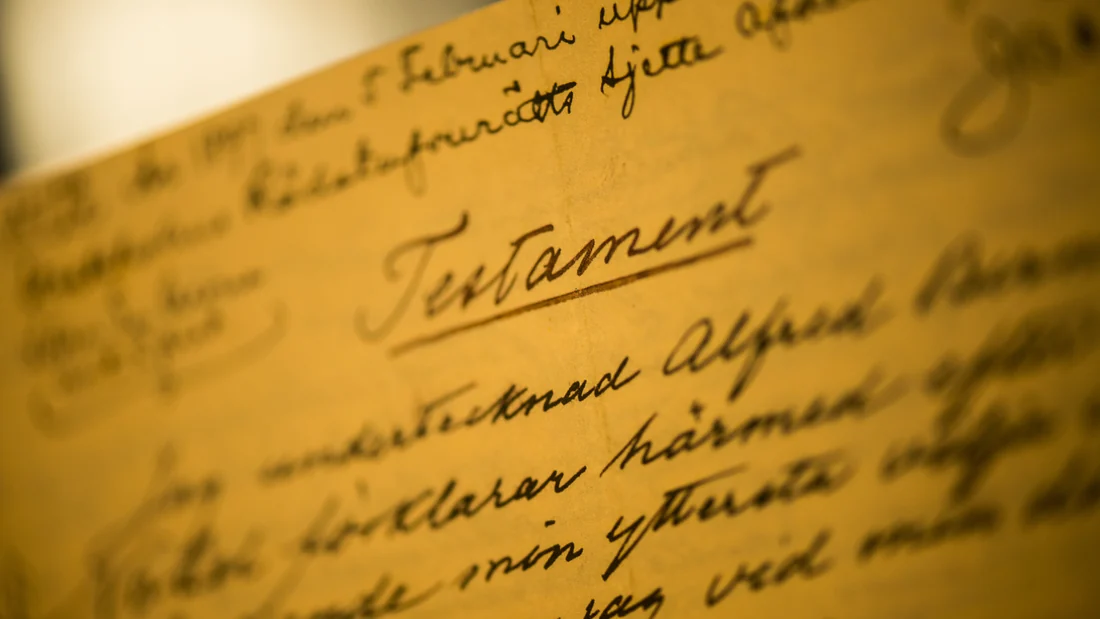
Alfred Nobel's will, dated 27 November 1895 and reproduced in full on the Nobel Foundation's own site, directed that part of his fortune fund several prizes, one for "the person who shall have produced in the field of literature the most outstanding work in an ideal direction." The Nobel Prize's own literature page states the prize "is awarded by the Swedish Academy, Stockholm, Sweden," and that literature was "the fourth prize area Nobel mentioned in his will," after his own literary interests, developed since youth, had led him to try writing fiction late in life. The first Nobel Prize in Literature went to the French poet Sully Prudhomme; the award ceremony speech, delivered by C. D. af Wirsen, Permanent Secretary of the Swedish Academy, is dated "on December 10, 1901."
What the documents show
The Foundation's own summary page gives the prize's exact citation: Prudhomme was honored "in special recognition of his poetic composition, which gives evidence of lofty idealism, artistic perfection and a rare combination of the qualities of both heart and intellect." What the will's language does not do, as published, is define "ideal direction" further; the phrase has been disputed since the prize began, a dispute this entry does not attempt to settle beyond noting the Foundation transcribes it without gloss. The literature page's "quick facts," current as retrieved on 16 September 2026, count 118 literature prizes and 122 laureates since 1901, only 18 of them women, a living tally that will change with each future award.
Why it stays interesting
A prize created by one sentence in a will, administered since by a single national academy rather than an international body, is a reminder that "the Nobel Prize" is shaped by a specific academy's judgments about a deliberately vague phrase. This is an editorial note: an argument about who "deserved" the 1901 prize is an argument about how the Academy read "ideal direction" that year, not a claim this entry can settle from the will's text alone. Founding language is worth reading directly rather than assumed from reputation; Nobel's will is short and more ambiguous than the prize's later prestige suggests.
What to read next
A reader could compare this with the Newbery Medal's founding purpose, "to encourage original creative work in the field of books for children," or the Pulitzer Prize for Fiction, established in 1917 under a different bequest. Each prize's founding document, read against its first award, shows how differently "merit" gets defined.
- Does a claim about a laureate's "ideal direction" cite the will's actual language, or only the prize's reputation for honoring greatness?
- How has the Academy's reading of Nobel's phrase visibly shifted between 1901 and more recent citations?
- What does a citation for one laureate, read on its own, actually claim, and what does it leave for a reader to infer?
The will's sentence and the 1901 citation for Sully Prudhomme are the prize's actual founding record; everything said about the Nobel Prize in Literature since has been built, and argued over, on top of that comparatively brief foundation.
Sources & reading trail
Reproduces the will's own language creating a literature prize for 'the most outstanding work in an ideal direction.'
Source published: 27 November 1895 · Retrieved: 16 September 2026
States the Swedish Academy administers the prize and gives current cumulative prize and laureate counts.
Source published: Not established · Retrieved: 16 September 2026
Gives the first laureate, Sully Prudhomme, and the exact citation for his award.
Source published: Not established · Retrieved: 16 September 2026
Dates the first award ceremony speech to 10 December 1901.
Source published: Not established · Retrieved: 16 September 2026
Reports, filings, records and studies establish the entry; the reading of why it stays interesting is Chapter Ledger editorial analysis. This retrospective draft does not imply the site published on the event date.
Continue reading
- A children's librarian created the world's first children's book prize
- Pulitzer's 1904 will handed future changes to a board, not a judge
- Three trade groups, not a foundation, founded the Book Awards
- Browse the complete the ledger archive
Sources & reading trail
- Full text of Alfred Nobel's will
Source published: November 27, 1895 · Retrieved: September 16, 2026 - The Nobel Prize in Literature
Retrieved: September 16, 2026 - The Nobel Prize in Literature 1901 (summary)
Retrieved: September 16, 2026 - Nobel Prize in Literature 1901 - Award ceremony speech
Retrieved: September 16, 2026
The documents above establish the record. The reading and the questions are this publication’s editorial analysis, written after the fact.
Published September 18, 2026, not on the date of the event described.