Research libraries pooled their scans into one shared repository
HathiTrust's own pages state which library partnerships founded it in 2008 and what its shared digital repository preserves.
- Historical event
- January 1, 2008
- Site publication
- September 18, 2026
The record
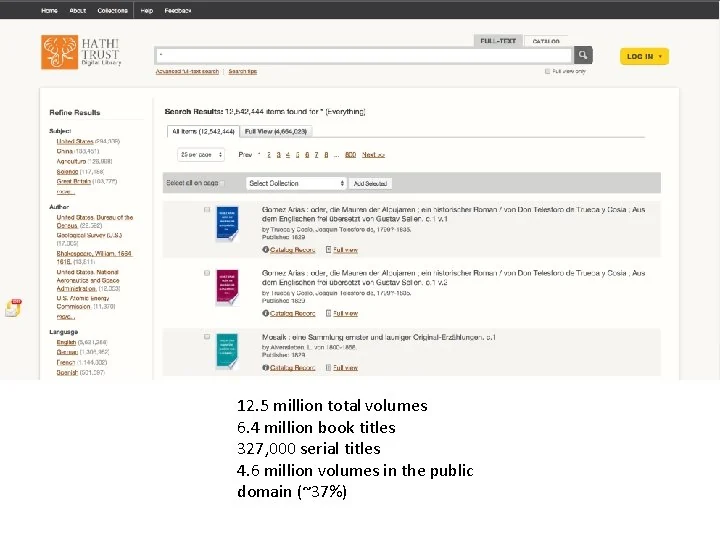
HathiTrust's own about page states that "HathiTrust was founded in 2008 as a not-for-profit collaborative of academic and research libraries," now "preserving 19+ million digitized items in the HathiTrust Digital Library." Its mission and history page names the founding partnership specifically: "the 12 universities in the Committee on Institutional Cooperation (now known as the Big Ten Academic Alliance) and the 11 libraries of the University of California" formed the collaboration in 2008, describing it as growing out of "the early days of mass digitization," when large volumes of library material were being scanned and needed a durable, shared home.
What the documents show
The two pages agree on the founding year and the identity of the founding member groups, and both describe the same underlying purpose: ensuring that "digitized collections, and the libraries that steward them, remain strong and serve scholarship into the future," as the mission page puts it. Neither page states a specific month or day for the 2008 founding, and both are current, periodically updated pages rather than a dated announcement from the founding year itself, so the exact founding date within 2008 remains undocumented here. The mission page also states HathiTrust's goals include "a particular emphasis on ensuring access for individuals with print disabilities," a detail the shorter about page does not repeat.
Why it stays interesting
HathiTrust's founding coalition, two large university library consortia rather than a single institution or a commercial platform, shapes what the repository can promise a reader: shared governance among dozens of libraries, rather than the priorities of one funder or company. For a researcher deciding whether to rely on HathiTrust's preservation claims, the founding structure the pages describe is itself part of the evidence for durability, since no single member's withdrawal would end the collaboration. This is an editorial inference from the founding structure the pages describe, not a claim either page makes explicitly about durability.
What to read next
A reader could next check the Authors Guild v. Google ruling for the digitization litigation that touched some of the same library scans HathiTrust preserves, and Open Library's own about page for a contrasting, single-organisation approach to a similar cataloguing ambition.
- What specific commitments did the founding Committee on Institutional Cooperation and University of California libraries make to each other in 2008?
- How does a multi-institution founding structure affect a repository's preservation guarantees compared with a single-institution project?
- What access provisions for print-disabled readers does HathiTrust's own mission page describe, and how are they implemented?
HathiTrust's founding is documented here as an institutional fact, dated to 2008 and named to specific library consortia, without a single day-level announcement this record can point to; the founding's significance lies in its shared structure more than in any one date.
Sources & reading trail
States HathiTrust was founded in 2008 as a not-for-profit collaborative of academic and research libraries now preserving over 19 million digitized items.
Source published: Not established · Retrieved: 16 September 2026
States the partnership formed in 2008 between the 12 Committee on Institutional Cooperation universities and the 11 University of California libraries to preserve shared digitized collections.
Source published: Not established · Retrieved: 16 September 2026
Reports, filings, records and studies establish the entry; the reading of why it stays interesting is Chapter Ledger editorial analysis. This retrospective draft does not imply the site published on the event date.
Continue reading
- An appeals court called Google's book scanning a search tool
- A nonprofit set out to build one web page for every book
- A national library aggregated collections without owning them
- Browse the complete the ledger archive
Sources & reading trail
- Welcome to HathiTrust
Retrieved: September 16, 2026 - Our Mission & History
Retrieved: September 16, 2026
The documents above establish the record. The reading and the questions are this publication’s editorial analysis, written after the fact.
Published September 18, 2026, not on the date of the event described.