An EU directive set accessibility rules ebook sellers must meet
The European Accessibility Act's own text sets what ebook publishers and retailers must do, and by when member states had to act.
- Historical event
- April 17, 2019
- First source published
- April 17, 2019
- Site publication
- September 18, 2026
The record
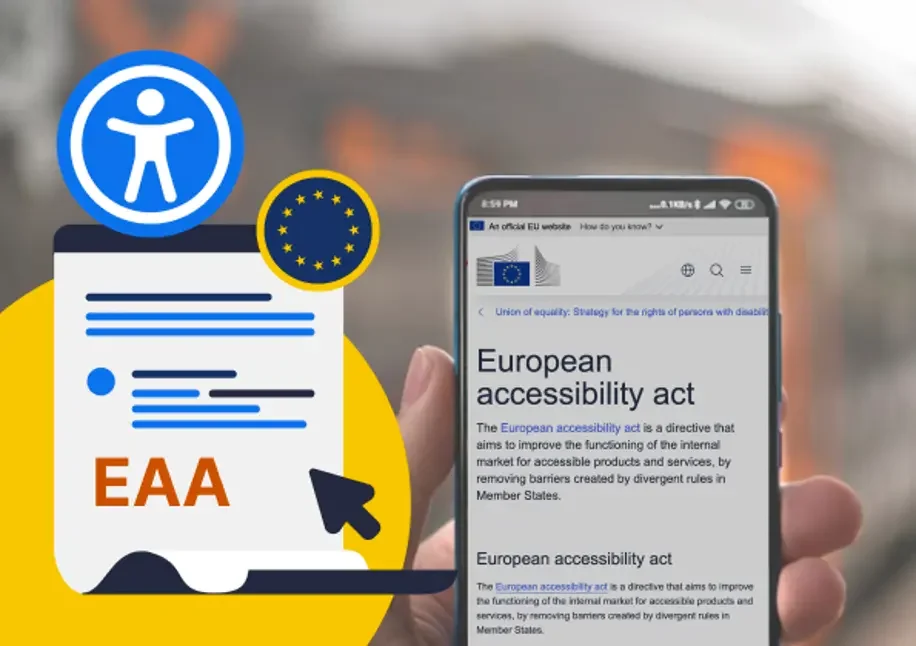
On 17 April 2019, the European Parliament and Council adopted Directive (EU) 2019/882, known as the European Accessibility Act, setting common accessibility requirements across the Union for a list of products and services that includes e-books, e-readers, and e-commerce. The directive's own text defines an e-book as a service providing digital files that convey an electronic version of a book, along with the software, including mobile apps, used to access and read them, and defines an e-reader as the dedicated hardware and software used for the same purpose. According to EUR-Lex's own legislative summary, member states had to adopt and publish national laws implementing the directive by 28 June 2022, and had to apply those measures, meaning businesses had to actually comply, from 28 June 2025.
What the documents show
The directive's recitals give a specific reason for including e-books at all: divergent national accessibility rules, the text states, would make it difficult for publishers to benefit from the advantages of the internal market, could create interoperability problems between books and e-readers, and would limit access for readers with disabilities. The European Commission's own page, as retrieved on 16 September 2026, confirms the June 2022 transposition deadline and lists e-books and e-commerce among the covered categories, describing itself as a living account of the Commission's ongoing monitoring of national implementation rather than a record of what any single member state has actually done.
Why it stays interesting
The directive is a useful record of how accessibility requirements for books moved from a matter of individual publisher policy to a matter of statute across an entire market, with a long lead time built into the law itself, six years between adoption and the date compliance became mandatory. For a publisher or retailer selling into the EU, the practical distinction the directive preserves is between the 2022 transposition deadline, which bound member states to pass their own laws, and the 2025 application date, which is when those national laws actually reached a business's obligations. This is an editorial note: the directive permits certain member states to delay compliance further for specific services under stated conditions, a detail a general summary can easily flatten.
What to read next
The W3C's EPUB 3 specification, with its accessibility metadata additions, gives a technical account of what a format itself can do to support the directive's aims. The site's own guide to epub accessibility questions is a useful companion for a publisher assessing what the directive requires in production terms.
- Has your own market's national law, adopted to meet the 2022 deadline, been checked against the directive's actual text?
- Which specific accessibility requirements in the directive apply to an e-book file itself, as opposed to a retailer's website?
- What happens to a title that was compliant in 2022 but has not been re-checked against the 2025 application date?
The directive's own text, together with the Commission's account of its ongoing implementation, is the record to check before assuming any single national law fully reflects what the underlying EU text requires.
Sources & reading trail
The directive's own definitions of e-book and e-reader and its recital explaining why they were included in scope.
Source published: 17 April 2019 · Retrieved: 16 September 2026
EUR-Lex's own summary of the adoption date and the 2022 transposition and 2025 application deadlines.
Source published: Not established · Retrieved: 16 September 2026
The European Commission's own current description confirming the transposition deadline and e-books/e-commerce as covered categories.
Source published: Not established · Retrieved: 16 September 2026
Reports, filings, records and studies establish the entry; the reading of why it stays interesting is Chapter Ledger editorial analysis. This retrospective draft does not imply the site published on the event date.
Continue reading
- A publishing format standard rebuilt itself on web technology
- A talking-book standard began with six libraries for blind readers
- Browse the complete the ledger archive
Sources & reading trail
- Directive (EU) 2019/882 of the European Parliament and of the Council
Source published: April 17, 2019 · Retrieved: September 16, 2026 - Directive (EU) 2019/882 — Accessibility Requirements for Products and Services (Summary)
Retrieved: September 16, 2026 - European Accessibility Act
Retrieved: September 16, 2026
The documents above establish the record. The reading and the questions are this publication’s editorial analysis, written after the fact.
Published September 18, 2026, not on the date of the event described.