The Supreme Court left copyright term extension to Congress
Eldred v. Ashcroft's 7-2 ruling records why a fixed term could still be extended without breaching 'limited Times.'
- Historical event
- January 15, 2003
- First source published
- January 15, 2003
- Site publication
- September 18, 2026
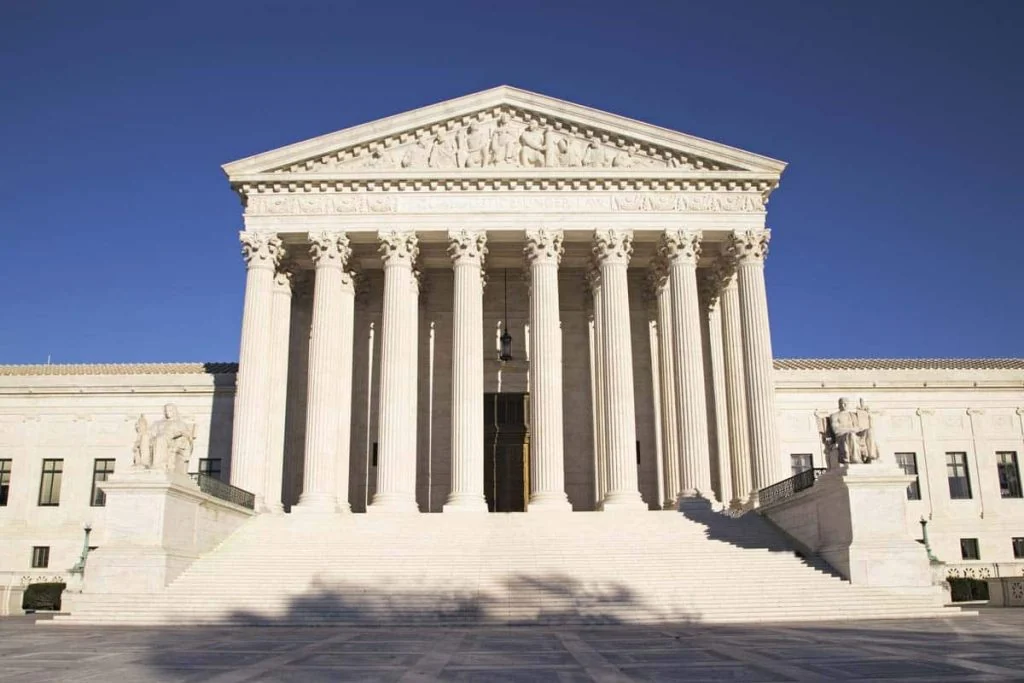
The record
On 15 January 2003 the Supreme Court decided Eldred v. Ashcroft, a case argued the previous October challenging the 1998 Copyright Term Extension Act. The Court's own bound-volume opinion states the petitioners, whose products built on works already in the public domain, argued that extending the term of existing copyrights by twenty years exceeded Congress's power under the Constitution's Copyright Clause and violated the First Amendment. The case record states the Court held 7-2 for the government, with the majority opinion delivered by Justice Ruth Bader Ginsburg and dissents from Justices John Paul Stevens and Stephen Breyer.
What the documents show
The opinion's syllabus states the Court's central holding directly: in placing existing and future copyrights “in parity” under the CTEA, Congress “acted within its authority and did not transgress constitutional limitations.” The Court reasoned that the word “limited” in the Copyright Clause meant, at the time of the framing and still today, “confined within certain bounds, restrained, or circumscribed,” not permanently fixed at the moment a copyright is secured. The case record adds a detail the opinion's own text does not dwell on at length: the dissenting justices argued the CTEA amounted to a functionally perpetual copyright undermining the public's interest, a disagreement about degree and pattern rather than about the specific twenty-year extension under review. What the ruling does not resolve, and does not purport to resolve, is whether some larger future extension would cross a constitutional line the CTEA did not.
Why it stays interesting
The ruling is the reason a reader cannot treat “limited Times” as a self-enforcing brake on Congress. This is an editorial point worth stating plainly for anyone tracking the public domain: works that might otherwise have entered it years earlier under the 1976 Act's terms remained under copyright because the Court found repeated extension, applied evenly to existing and future works, consistent with a textually “limited” term. A reader assessing a later term-extension proposal, or dating when a work should enter the public domain, is working within the boundary this ruling drew, not a boundary the Constitution's text alone settles.
What to read next
A reader could next check the record of Public Domain Day 2019, the first US public-domain entry after the CTEA-extended term finally elapsed on a broad class of works, or the record of the 1976 Copyright Act itself, whose term structure the CTEA amended and against which the Eldred petitioners measured their claim.
- Does a proposed copyright term still read as “limited,” or has parity with future works been used to disguise an open-ended extension?
- What distinguishes the majority's textual reading of “limited” from the dissent's structural concern about repeated extension?
- When does a work's public-domain entry date depend on a statute this ruling upheld, rather than on the work's original term alone?
Eldred v. Ashcroft settles a narrow constitutional question with a wide practical reach: it did not shorten any copyright, but it foreclosed the specific legal argument that might have unwound the 1998 extension, leaving the public domain's calendar exactly where Congress, not the Court, had set it.
Sources & reading trail
The Court's own bound-volume opinion and syllabus state the case's argument and decision dates and the holding that the CTEA's extension of existing copyrights does not exceed Congress's Copyright Clause authority.
Source published: 15 January 2003 · Retrieved: 16 September 2026
States the 7-2 vote breakdown, the majority opinion author, and the dissenting justices' reasoning.
Source published: Not established · Retrieved: 16 September 2026
Reports, filings, records and studies establish the entry; the reading of why it stays interesting is Chapter Ledger editorial analysis. This retrospective draft does not imply the site published on the event date.
Continue reading
- A 1976 law moved fair use into the statute for the first time
- A twenty-year freeze on the public domain calendar finally ended
- An 1886 treaty made copyright protection automatic across borders
- Browse the complete the ledger archive
Sources & reading trail
- Eldred v. Ashcroft, 537 U.S. 186 (2003)
Source published: January 15, 2003 · Retrieved: September 16, 2026 - Eldred v. Ashcroft case record
Retrieved: September 16, 2026
The documents above establish the record. The reading and the questions are this publication’s editorial analysis, written after the fact.
Published September 18, 2026, not on the date of the event described.