The Brontës made toy-soldier-sized books too small for adults
The museum's own pages describe why the children's tiny handwriting was practical, not just precious.
- Site publication
- September 18, 2026
The record
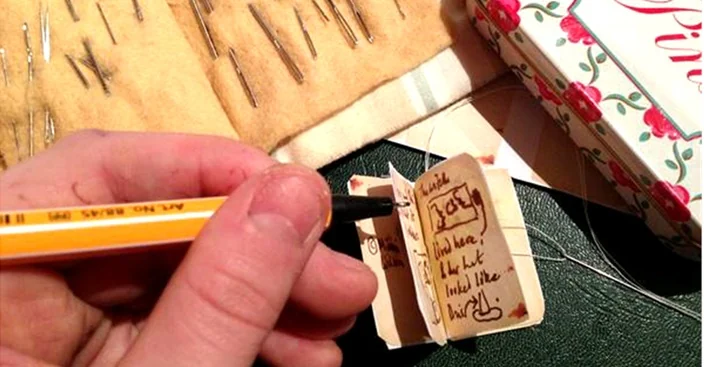
The Brontë Parsonage Museum, in the Haworth parsonage where the Brontë siblings grew up, holds hand-stitched miniature books the children made as part of invented kingdoms called Glass Town, Angria, and Gondal. The museum's own craft-activity page, based on the originals, states plainly what the little books were for: "The Brontë children wrote all their stories, poems and adventures in tiny little books which they stitched themselves, and where they wrote in minuscule handwriting. They were designed to be toy-soldier size, but they also saved on scarce paper, and, most importantly, they were far too small for grown-up eyes to read." A separate museum news post describes one example that entered the collection within living memory: "a Charlotte Brontë miniature manuscript, created when she was just fourteen years old," dated 19 August 1830, "no bigger than a match box" and "packed with stories and advertisements written in Charlotte's own hand."
What the documents show
The two pages describe different things and should not be blended: the craft page explains the little books' form and stated purpose, while the news post documents one acquisition, not the whole collection's history. That acquisition is dated precisely because it was recent: the museum learned the manuscript was coming to auction in Paris in summer 2019, launched a crowdfunder on 25 October with an £80,000 target, and reports "1090 supporters gifted £86,570" against an expected price of "at least £650,000." The museum's pages do not supply a dated inventory of every surviving little book; this entry confirms only the 2019 item's history, not a complete timeline.
Why it stays interesting
A format built to be both economical and unreadable by adults documents children's writing shaped by real constraints, scarce paper and supervision, not only by whimsy. This is an editorial note: "far too small for grown-up eyes to read" recasts the handwriting as a deliberate act of privacy as much as style, which matters for anyone treating the juvenilia as charming ephemera rather than guarded work the siblings did not necessarily intend adults to read easily. The 2019 acquisition is also a working example of how a small museum secures an item against a private buyer: public fundraising against a fixed auction deadline.
What to read next
A reader interested in early writing preserved despite its makers' indifference to posterity could compare the little books with Jane Austen's surviving juvenilia, notebooks a digital edition has also reunited from separate institutions, or the Langston Hughes papers at Yale, an archive of an adult author's deliberate lifetime gifts rather than a family's later choice to preserve childhood work.
- Does a description of the Brontë juvenilia specify which sibling wrote a given little book?
- What does the 2019 auction reveal about how many little books remain in private hands, not the museum's collection?
- If the format resisted adult reading, what does that imply about how much the Brontë parents actually saw?
The museum's own account treats the little books as functional objects first, small because paper was scarce and eyes were meant to be excluded, worth keeping before any claim about the juvenilia's later importance.
Sources & reading trail
States the juvenilia's miniature, stitched form and the children's practical reasons for the tiny handwriting.
Source published: Not established · Retrieved: 16 September 2026
Documents the 2019 discovery, crowdfunder, and acquisition of a specific 1830 Charlotte Brontë little book.
Source published: Not established · Retrieved: 16 September 2026
Reports, filings, records and studies establish the entry; the reading of why it stays interesting is Chapter Ledger editorial analysis. This retrospective draft does not imply the site published on the event date.
Continue reading
- A digital edition reunited Austen's manuscripts, minus her six novels
- Smith College holds the papers of a poet it once taught
- A poet's own gifts built an archive years before his estate did
- Browse the complete the ledger archive
Sources & reading trail
- Make your own 'Little Book' (Crafts and activities)
Retrieved: September 16, 2026 - Our Little Book Crowdfunder Champions
Retrieved: September 16, 2026
The documents above establish the record. The reading and the questions are this publication’s editorial analysis, written after the fact.
Published September 18, 2026, not on the date of the event described.