A caged-book display at a 1982 trade show became an annual week
ALA's own account traces Banned Books Week to a 1982 booksellers' exhibit and the coalition it produced.
- Historical event
- January 1, 1982
- First source published
- November 1, 2017
- Site publication
- September 18, 2026
The record
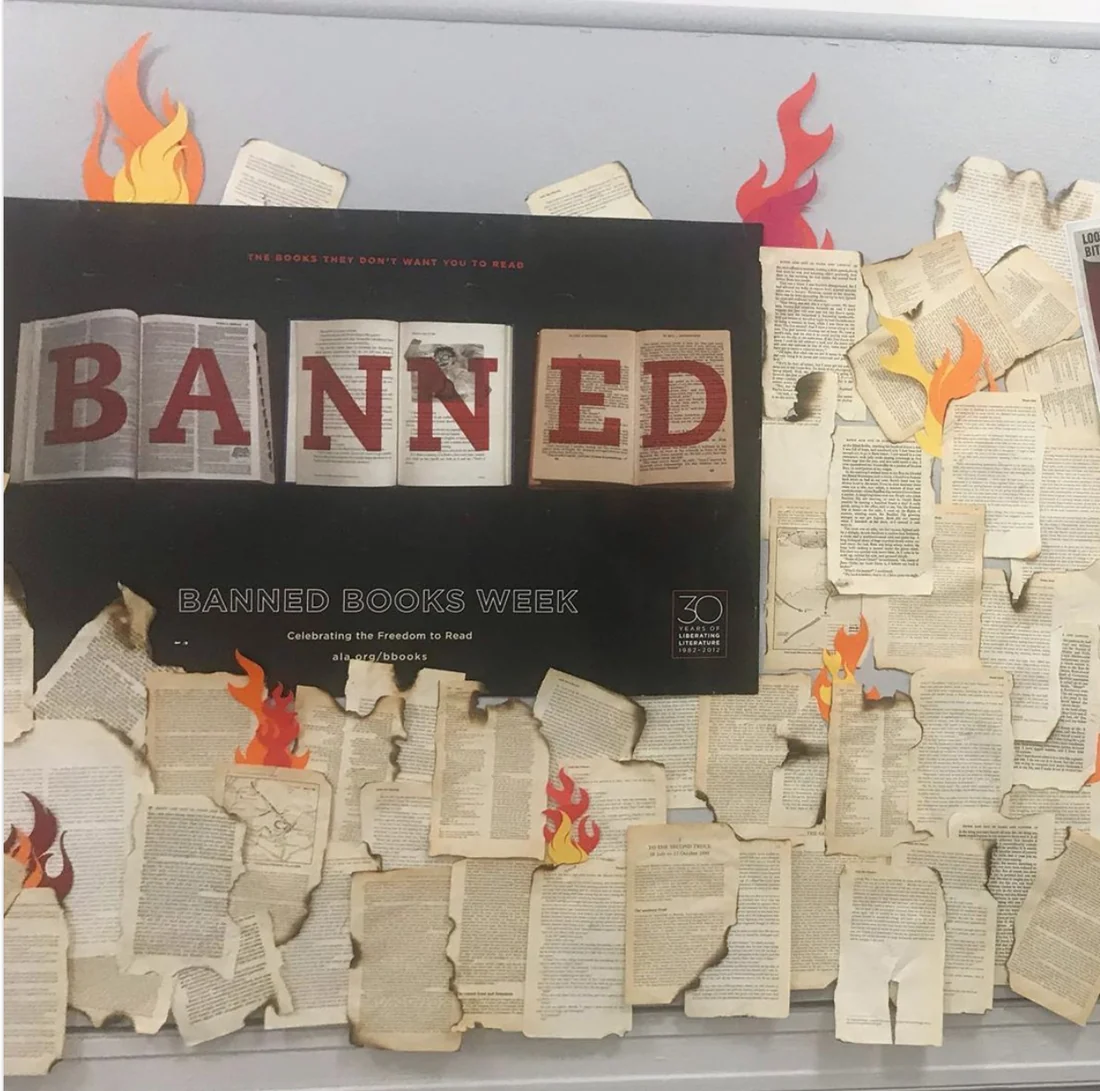
In 1982, the American Booksellers Association built an exhibit for its annual convention in Anaheim: books that had been challenged or removed from schools, libraries and bookstores, displayed behind the bars of padlocked metal cages. The trade magazine's own retrospective records that, drawing on the exhibit's impact, ABA invited Judith Krug, director of the American Library Association's Office for Intellectual Freedom, to join a new observance called Banned Books Week, together with the National Association of College Stores. The three organizations, the account says, scrambled to assemble materials before that September's show date, hoping their combined membership would start conversations about censorship. ALA's own current page for the observance states plainly that Banned Books Week launched in 1982 in response to a sudden surge in the number of book challenges reported in libraries, schools and bookstores.
What the documents show
Both records agree on the year and the animating concern: a visible rise in challenges met with a visible, cage-bound rebuttal. What neither record fixes is a single founding date within 1982; the trade convention that hosted the cages fell in the spring, while the observance itself has settled into the last week of September. ALA's page adds that it is now one founding member of a larger Banned Books Week Coalition, an alliance the page does not itself enumerate beyond describing it as international and diverse. The magazine account, written decades later as institutional history, names the three founding organizations specifically but does not quote contemporaneous 1982 planning documents, so the granular week-to-week detail of that first observance rests on institutional memory rather than a dated internal memo.
Why it stays interesting
The founding pairs two habits that recur across the censorship record: a demonstration built to be photographed, and a coalition built to outlast the photograph. This is an editorial observation, but it is worth carrying into any year's coverage of a challenged-book list: the week's persistence for over four decades depends less on any single dramatic display than on the standing coalition ALA describes itself as belonging to, which keeps producing the calendar, the data and the annual honorary chair regardless of which titles are contested in a given year.
What to read next
A reader tracing the same institutional lineage forward could check the entry on the American Library Association's 1876 founding, which supplies the century of institutional continuity behind the 1982 observance, or the 1953 Freedom to Read Statement, which supplies the argument Banned Books Week later dramatized.
- What did the 1982 rise in challenges consist of, and who counted it?
- Which organizations besides ALA, ABA and the college-stores association joined the coalition, and when?
- How has the coalition's honorary-chair practice changed what the week is understood to do?
The record supports a founding year, a triggering exhibit, and three founding organizations; it does not support a single origin story reducible to one meeting or one memo, and a careful reader should hold the cage exhibit and the ongoing coalition as two separate, sequential facts rather than one continuous event.
Sources & reading trail
ALA's own statement that Banned Books Week launched in 1982 in response to a rise in book challenges, and that ALA is a founding member of the Banned Books Week Coalition.
Source published: Not established · Retrieved: 16 September 2026
ALA's own magazine account of the 1982 caged-book exhibit at BookExpo America and ABA's invitation to Judith Krug and the National Association of College Stores to found the observance.
Source published: 1 November 2017 · Retrieved: 16 September 2026
Reports, filings, records and studies establish the entry; the reading of why it stays interesting is Chapter Ledger editorial analysis. This retrospective draft does not imply the site published on the event date.
Continue reading
- A centennial-year library convention produced a chartered association
- Librarians and publishers jointly adopted a statement in 1953
- A writers' club founded fellowship and advocacy together
- Browse the complete the ledger archive
Sources & reading trail
- Banned Books Week®
Retrieved: September 16, 2026 - 50 Years of Intellectual Freedom
Source published: November 1, 2017 · Retrieved: September 16, 2026
The documents above establish the record. The reading and the questions are this publication’s editorial analysis, written after the fact.
Published September 18, 2026, not on the date of the event described.