Seventeen novelists sued an AI company as a proposed class
The Authors Guild's own statement and the case docket record the claims filed against OpenAI in 2023.
- Historical event
- September 19, 2023
- First source published
- September 20, 2023
- Site publication
- September 18, 2026
The record
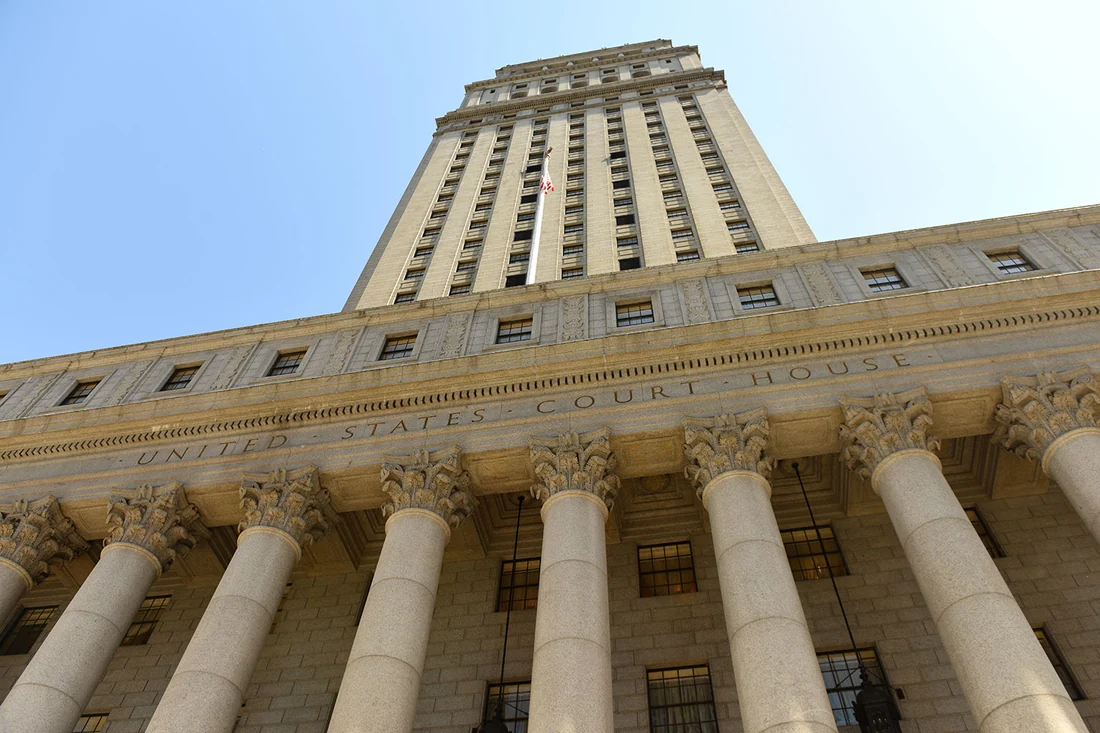
On 19 September 2023, the Authors Guild and seventeen named authors filed a proposed class action against OpenAI in the Southern District of New York. A docket record lists the case as Authors Guild v. OpenAI Inc., number 1:23-cv-08292, filed that date. The Guild's own announcement names the plaintiffs, including David Baldacci, Michael Connelly, Jonathan Franzen, John Grisham, George R.R. Martin, Jodi Picoult, George Saunders and Scott Turow among others, and states the complaint's central claim: that OpenAI used the authors' copyrighted books to train its GPT models without permission or payment, and that some of those books were obtained from what the announcement calls pirate repositories before being incorporated into GPT-3.5 and GPT-4.
What the documents show
The Guild's announcement is explicit that the suit was, at filing, a proposed class action, meaning class certification had not yet been granted by any court; this entry does not describe the suit as a certified class action for that reason. The announcement quotes Guild chief executive Mary Rasenberger stating the outputs are, in her words, mere remixes without the addition of any human voice, and Guild president Maya Shanbhag Lang describing the case as the beginning of a broader effort to defend authors from what she calls theft by generative AI systems. These are the plaintiffs' own characterizations of the claims, offered in a press statement rather than a court finding; the docket record confirms only that the case was filed and assigned, not that any court has ruled on the underlying allegations.
Why it stays interesting
The filing is one of several parallel author lawsuits against AI developers that reached federal courts within months of each other in 2023, and it names an unusually broad and commercially prominent set of plaintiffs for a publishing-industry copyright suit. This is editorial: the case's significance to date lies less in any ruling, since this entry does not assert one, than in what its filing represents, an organized industry response using litigation rather than only public advocacy, following the same association's earlier Fair Contract Initiative in shifting from statement to formal claim.
What to read next
A reader could next check the parallel Silverman v. OpenAI and Kadrey v. Meta filings from the same period, recorded elsewhere in this ledger, to compare plaintiffs, claims and named defendants across the wave of 2023 author lawsuits. The Authors Guild's own later AI model contract clause, also recorded here, shows the same organization pursuing a parallel, non-litigation strategy at roughly the same time.
- What distinguishes a proposed class action from a certified one, and at what point would a court rule on certification here?
- How do the claims in this suit compare with those the Guild pursued a decade earlier against a large-scale book-scanning project?
- What would count as evidence, in a court's own terms, that a specific book was used to train a specific model version?
A filing date and a list of plaintiffs are what the record firmly establishes here; the claims themselves remain allegations until a court rules on them, and this entry treats them as such.
Sources & reading trail
Names the plaintiffs, states the claims made against OpenAI, and quotes Guild leadership.
Source published: 20 September 2023 · Retrieved: 16 September 2026
Confirms the case name, docket number, court and 19 September 2023 filing date independent of the Guild's own announcement.
Source published: Not established · Retrieved: 16 September 2026
Reports, filings, records and studies establish the entry; the reading of why it stays interesting is Chapter Ledger editorial analysis. This retrospective draft does not imply the site published on the event date.
Continue reading
- Two lawsuits named a shadow library as an AI training source
- Authors Guild drafted a clause to block AI training uses
- A guild's 2015 initiative named specific unfair contract terms
- Browse the complete the ledger archive
Sources & reading trail
- Authors Guild and 17 Authors File Class Action Suit Against OpenAI
Source published: September 20, 2023 · Retrieved: September 16, 2026 - Authors Guild v. OpenAI Inc. (Docket No. 1:23-cv-08292)
Retrieved: September 16, 2026
The documents above establish the record. The reading and the questions are this publication’s editorial analysis, written after the fact.
Published September 18, 2026, not on the date of the event described.