An appeals court called Google's book scanning a search tool
The Second Circuit's opinion and the Copyright Office's own summary state why Google's scanning and snippet display were ruled fair use.
- Historical event
- October 16, 2015
- First source published
- October 16, 2015
- Site publication
- September 18, 2026
The record
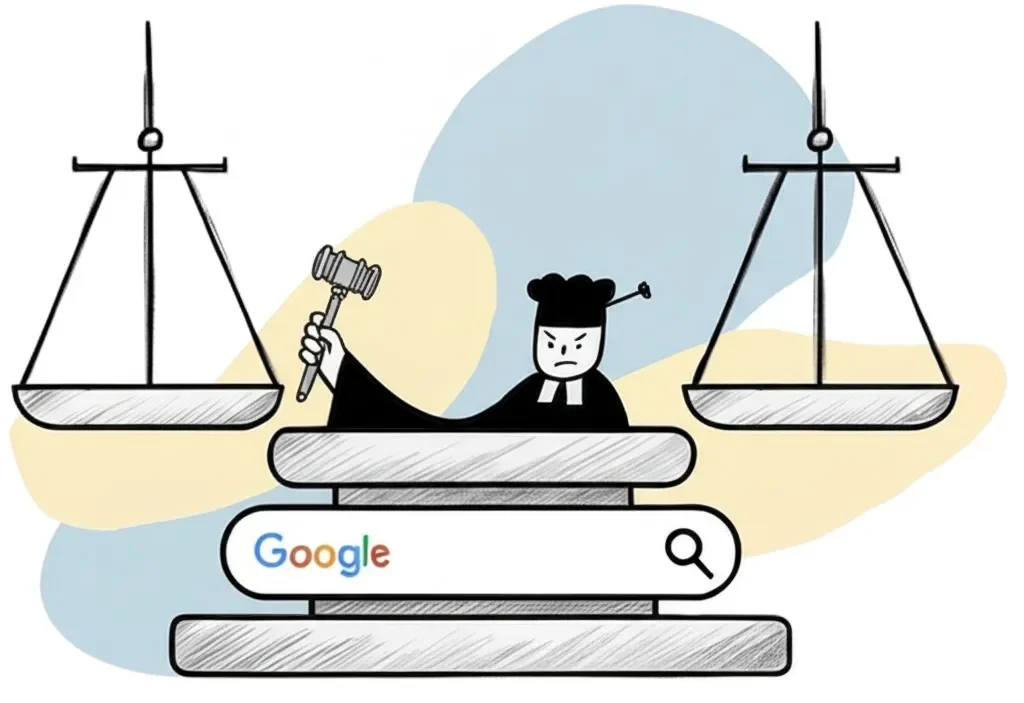
The Second Circuit's own opinion, decided 16 October 2015 in Authors Guild, Inc. v. Google, Inc., states its conclusion at the outset: Google's "copying is transformative within the meaning of Campbell v. Acuff-Rose Music, Inc.," "does not offer the public a meaningful substitute for matter protected by the plaintiffs' copyrights," and "satisfies § 107's test for fair use." The court, in an opinion by Judge Pierre Leval, affirmed the Southern District of New York's grant of summary judgment to Google over digitization begun in 2004 through Google's Library Project, which scanned tens of millions of books submitted by major research libraries and made them searchable with "snippets" of surrounding text.
What the documents show
The opinion itself sets out the reasoning in detail; the U.S. Copyright Office's own Fair Use Index summary of the same case restates the court's central finding in nearly the opinion's own words, that Google's search function "augments public knowledge" by making information about books available "without providing the public with a substantial substitute" for the originals. On the fourth fair-use factor, market effect, the Copyright Office's summary quotes the circuit court's finding that the "brevity of the snippet search results and the 'cumbersome, disjointed, and incomplete nature of the aggregation of snippets'" made it unlikely that Google's use could "provide a significant substitute for the purchase of the author's book." Neither document extends this reasoning to any digitization project beyond the one before the court; both describe the ruling as resting specifically on Google's snippet-view limits and its library-copy arrangements, not on digitization generally.
Why it stays interesting
The ruling turns on a distinction a casual summary easily loses: not whether copying occurred, which the court did not dispute, but whether the resulting tool functioned as a substitute for reading the book. A publishing professional assessing a newer search or discovery tool against this precedent would need to ask the same narrow question the court asked, rather than treating "transformative" as a general license. This is an editorial framing of the ruling's use, not a claim the court itself makes about future technologies.
What to read next
A reader could next check the related litigation over HathiTrust's shared repository, built from some of the same library scans, and the Copyright Office's Fair Use Index for other rulings applying the same four-factor test to digitization projects.
- What specifically about Google's snippet-view design, rather than the scanning itself, did the court treat as decisive?
- How did the library-copy arrangement affect the court's contributory-infringement analysis?
- What would distinguish a newer digitization project from the one this ruling actually addressed?
The 2015 ruling settled one case's facts under a four-factor test built for case-by-case judgment; it is authority for how that test was applied here, not a blanket clearance for scanning projects it never examined.
Sources & reading trail
Reproduces the Second Circuit's opinion holding Google's scanning, indexing and snippet display of copyrighted books to be transformative fair use, and affirming summary judgment for Google.
Source published: 16 October 2015 · Retrieved: 16 September 2026
Summarizes the court's holding that Google's search function augments public knowledge without providing a substantial substitute for the originals, and that snippet view's brevity makes it an unlikely substitute for a book purchase.
Source published: Not established · Retrieved: 16 September 2026
Reports, filings, records and studies establish the entry; the reading of why it stays interesting is Chapter Ledger editorial analysis. This retrospective draft does not imply the site published on the event date.
Continue reading
- A judge found the Google Books settlement went too far
- Research libraries pooled their scans into one shared repository
- A federal court found library ebook scanning was not fair use
- Browse the complete the ledger archive
Sources & reading trail
- Authors Guild, Inc. v. Google, Inc., No. 13-4829-cv (2d Cir. Oct. 16, 2015)
Source published: October 16, 2015 · Retrieved: September 16, 2026 - Authors Guild, Inc. v. Google Inc. (U.S. Copyright Office Fair Use Index summary)
Retrieved: September 16, 2026
The documents above establish the record. The reading and the questions are this publication’s editorial analysis, written after the fact.
Published September 18, 2026, not on the date of the event described.