A guild's 2015 initiative named specific unfair contract terms
The Authors Guild's own launch materials list which standard clauses it targeted as unbalanced.
- Historical event
- May 28, 2015
- First source published
- May 28, 2015
- Site publication
- September 18, 2026
The record
At BookExpo America in 2015, the Authors Guild announced what it called the Fair Contract Initiative, an effort to reexamine the standard book contract clause by clause. The Guild's own announcement, dated 28 May 2015, states the initiative's guiding principle as an effort to restore balance to the author-publisher relationship and help authors achieve a fair return for the efforts they contribute to the joint venture of book publication. A companion mission statement, uploaded the same month, situates the launch against results from the Guild's first major member income survey since 2009, whose preliminary findings the Guild says showed a substantial decline in writing income over the preceding five years.
What the documents show
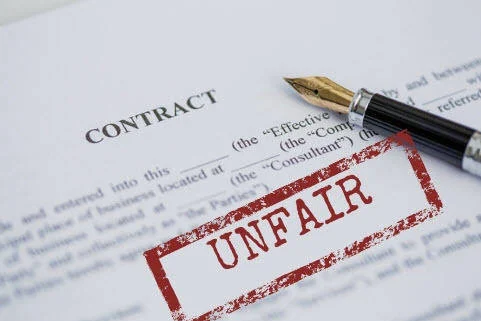
The mission statement is specific in a way the announcement is not: it lists particular standard-contract terms the Guild considered unfair, among them rights grants running thirty-five years or the length of an author's life plus seventy, a publisher's option to reject a finished manuscript while keeping any advance already paid, publication timelines running two years or longer at a publisher's discretion, and a non-compete clause preventing an author from publishing another book under any name until the contracted one appears. The document also states that publishers were, in its words, keeping a large majority of e-book income under contemporary terms. These are the Guild's own characterizations, offered as advocacy for its members rather than as findings a court or regulator has confirmed, and this entry does not treat them as settled facts about any individual publisher's practice.
Why it stays interesting
The initiative is a documented case of an author organization using its own contract-review expertise to name specific terms, rather than arguing in general about fairness. This is editorial: whatever a reader concludes about the merits of any one clause, the 2015 materials show a trade association converting member survey data into a targeted advocacy list, a method later industry advocacy on artificial intelligence contract clauses would follow in its own way. Treating the list as the Guild's negotiating position, not as neutral industry consensus, is essential to reading it accurately.
What to read next
A reader could next check the Guild's current Model Trade Book Contract, which the organization has continued to update, to see how many of the 2015 list's specific complaints appear addressed in the Guild's own recommended replacement language. This site's record of the Guild's 2023 lawsuit against OpenAI shows the same organization applying a comparable advocacy method to a newer contract and compensation question.
- Which of the clauses the Guild named in 2015 have since become less common in standard publishing contracts, and by what evidence?
- How did the Guild's 2015 member income survey methodology compare with later surveys it conducted?
- What would a publisher's own account of the same clauses, absent from these documents, add to this record?
A trade association's advocacy materials are not a neutral audit, but as a dated record of what one organization considered unacceptable in 2015, they remain a specific and checkable historical marker.
Sources & reading trail
States the initiative's launch venue, date and guiding principle in the Guild's own words.
Source published: 28 May 2015 · Retrieved: 16 September 2026
Lists the specific standard contract terms the Guild targeted and the survey data it cited, as the Guild's own advocacy position.
Source published: Not established · Retrieved: 16 September 2026
Reports, filings, records and studies establish the entry; the reading of why it stays interesting is Chapter Ledger editorial analysis. This retrospective draft does not imply the site published on the event date.
Continue reading
- Authors Guild drafted a clause to block AI training uses
- Seventeen novelists sued an AI company as a proposed class
- Browse the complete the ledger archive
Sources & reading trail
- Authors Guild Announces Fair Contract Initiative at BEA 2015
Source published: May 28, 2015 · Retrieved: September 16, 2026 - The Authors Guild Fair Contract Initiative: A Fresh Look at the Standard Contract
Retrieved: September 16, 2026
The documents above establish the record. The reading and the questions are this publication’s editorial analysis, written after the fact.
Published September 18, 2026, not on the date of the event described.